
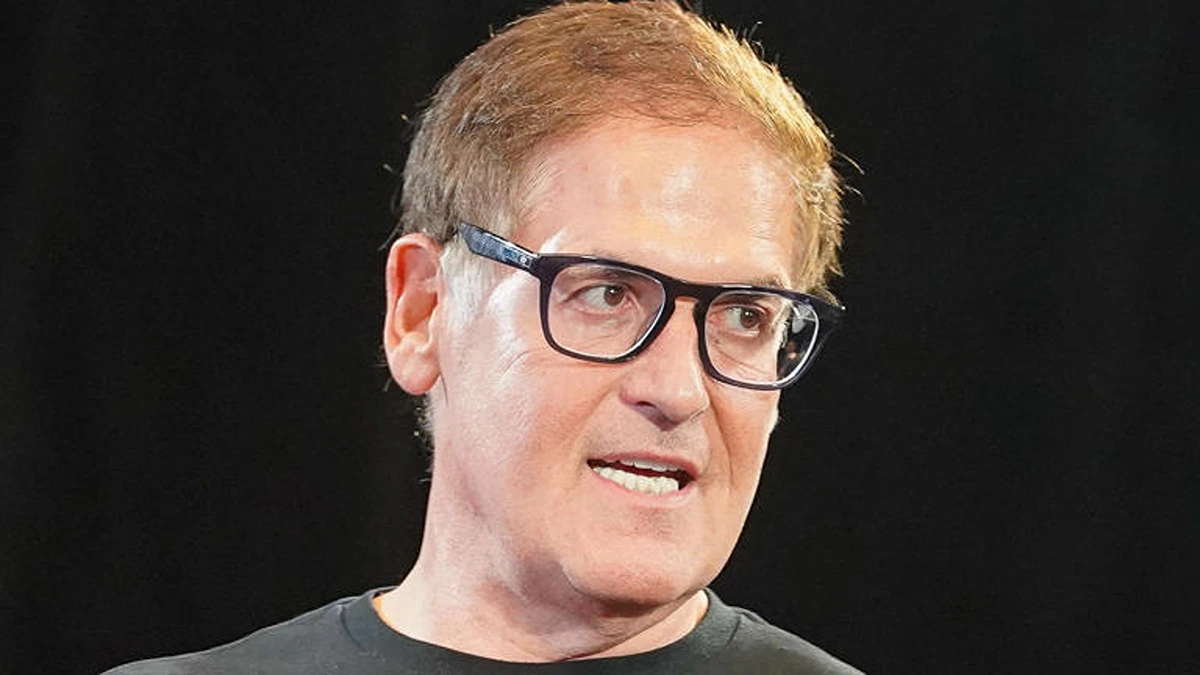
Mark Cuban is known across the globe as a billionaire owning the Dallas Mavericks, a seasoned investor, and a commentator. Regardless of that, he is one of the few individuals who speak candidly about real-world problems, particularly when it is about fundamental problems like healthcare.
In one of his recent posts on his X account in December 2025, he mentioned that he has lived on both spectrums of the United States healthcare system. On one hand, he was so poor that he could not even afford basic treatment. On the other hand, today he is wealthy enough to write any amount of checks for care.
Yet he finds the American healthcare system deeply flawed. Mark’s straightforward response stirred a debate around the U.S. medical system, pricing, and the role of intermediaries. His message came from his own experience, further showing a mirror to all Americans.
Let’s have a closer look at why Mark Cuban believes that the American healthcare system is not appropriate for common people.
Mark Cuban’s Experience on Both Sides of the Healthcare Divide
Mark Cuban has lived in a poor apartment with a few roommates, further surviving on cheap essentials, and not being able to afford healthcare. Consequently, he understands that the healthcare system should work for every individual and household, but as of now, it does not.
During the time when Mark Cuban was not wealthy, medical costs were a huge issue because, without treatment, the injury or illness could get worse.
But as of today, Cuban can write any number of checks for any treatment of care he wants. Nevertheless, even with financial resources, the process of getting care is full of inefficiencies, high costs, and bureaucratic complexity.
Mark has mentioned on X that there are two types of healthcare hellholes in America. Firstly, when you cannot even afford care, it makes people sicker, and secondly, when you can afford it but go through long waiting hours and non-transparent billing.
Mark’s point of view is powerful as it eliminates the perspective that only one community of people is suffering. Thus, both extremes of the healthcare system reflect that neither works efficiently for Americans.
The U.S. System Is Neither Free Nor Fair, Mark Cuban Says
Mark Cuban has frequently quoted a line like, “Our healthcare is not a free market. It is not an efficient market. It is not a fair market.” Let’s have a look at what it means.
Lack of Price Transparency
In all the markets and sectors, prices are clearly visible and transparent up front to the consumers. However, this is not the case with the United States healthcare, as patients are mostly unaware of medications, procedures, and services. The prices are not transparent until the treatment is done, and patients are handed a bill weeks later.
Monopolies and Market Concentration
Many critics often responded to Mark’s post, further pointing to another issue. The United States healthcare system is mostly dominated by huge players, hospital chains, middlemen of pharmacies, and insurance companies.
Many commentators illustrated healthcare as a cornered market, which requires antitrust. Also, other critics highlighted how insurance companies are booking profits and denying care. Yet, they market and advertise as if they are advocates of patients.
As a matter of fact, when large corporations start controlling negotiations and pricing in any sector, the market becomes more about corporate power.
Tying Healthcare to Employment
One of the other major issues in the U.S. healthcare system is that your treatment and health coverage are tied to your job. In case you lose your job, you will lose your coverage, as mentioned by one person on Mark Cuban’s post on X.
A job loss, a short break, or retirement can get people uninsured in just one day. Thus, a system that is crucial for a person’s wellbeing and productivity, this linkage creates insecurity and instability for the common people.
The Healthcare System Fails Both the Poor and the Middle Class
Basically, Cuban’s criticism is about how the healthcare system in America fails most of the ordinary people, particularly those with no wealth.
Too Expensive for Many to Afford
At the present time, when ordinary citizens of America are not able to afford basic treatment like regular checkups, chronic disease management, or any urgent care, the consequences showcase compounding effects.
In this scenario, people can get more sick, injured, or even die simply because they were not able to afford basic care due to the high cost.
The Middle-Class Squeeze
Even the middle-class families suffer; people who are insured face surprise bills, high deductibles, and co-pays. This leaves many middle-class households to pay thousands of dollars out of their own pocket. It leads to medical debt or loans, which is one of the major causes of bankruptcy in the United States. Hence, having insurance does not mean stress-free and affordable treatment.
Healthcare Quality Doesn’t Match Cost
Henceforth, one of the major criticisms faced by the U.S. healthcare system is that U.S. citizens pay more for less. Spending a higher amount on treatment does not always mean better outcomes or shorter wait times, with simple processes.
Takeaway
Mark Cuban’s critique of the U.S. healthcare goes beyond political talking points. Drawing on both personal struggles and his entrepreneurial lens, he argues that America’s healthcare system fails at the most basic level: affordability, clarity, and fairness.
Whether someone is poor or rich, accessing healthcare in the U.S. remains an ordeal rife with hidden prices, limited competition, and systemic inefficiencies.