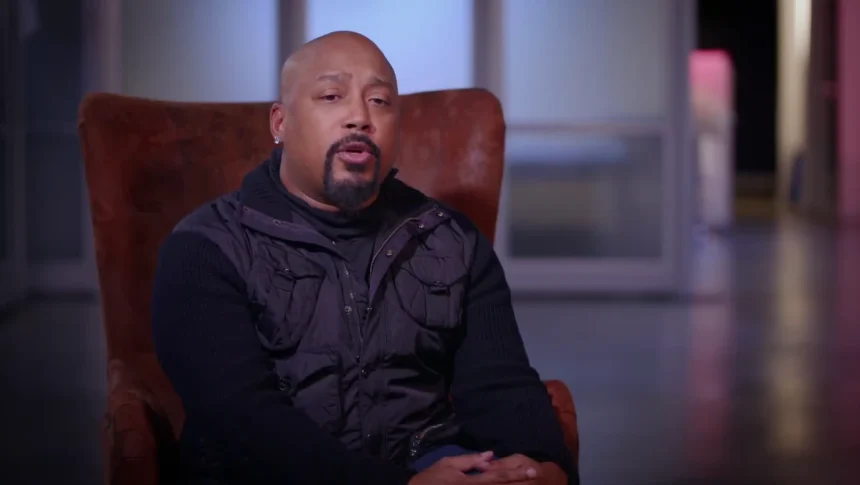
Like any other person who is extra rich, Daymond John has jumped in to defend his fellow wealth hoarders on TMZ Live. He has a bone to pick with people who blame the wealthy for the world’s problems.
According to Daymond, the ultra-wealthy aren’t the villains people make them out to be. They’re the ones driving innovation, creating jobs, and keeping the economy alive. He made it clear he’s not buying into the “eat the rich” attitude and thinks people need to look at how much the wealthy contribute before judging them.
Daymond John on Billionaires
The FUBU founder explained how billionaires aren’t the bad guys people make them out to be. He pointed out that many of them donate huge amounts of money, create jobs, fund hospitals, and reinvest in the economy. He also took a jab at critics, saying most of them do a lot more talking than actual contributing.
In the interview, it was brought up that many of TMZ’s younger staff support wealth redistribution and back Zohran Mamdani’s push for change in New York. Like many business moguls, Daymond immediately responded with attempted wit.
He said the younger generation should then try working for the government instead, then pointed out that government employees aren’t even getting paid during the shutdown. The response was too quick and full of conviction for something that was contradicting itself and had no reasoning to fully hold up.
Daymond also said that no sane business owner would walk away from millions in profit. He added that the same people shouting about the rich would likely stop talking if they ever reached billionaire status themselves.
What Sets Billionaires Apart
Daymond has also elucidated in detail what sets billionaires apart. Apart from exploiting the masses, there are three distinct features.
The Privilege of Calling Poverty a “Strategy”
Daymond John told Business Insider that being broke can actually spark creativity. He said, “When your back is up against the wall and you have no other way to advance or create relationships and you can’t buy anybody—you can’t buy things to help you—you start to become creative. When you become creative, that’s when you think outside the box—and that’s utilizing the power of broke.”
Utilizing the power of being broke is a tone-deaf thing for a multi-millionaire to say, but sure.
Once again, he went on to expose the fallacy in his own tone-deaf argument by saying, “The billionaires I’ve seen use the power of broke. They may spend a billion dollars on a party, because that’s a party. But they are very disciplined, and they won’t spend that on launching a company—they’ll act like they don’t have anything.”
The Importance of Pen and Paper
Daymond also believes writing everything down is the mantra to success. “We’re in this day and age where people are typing into their smartphones. Physically write down everything. I remember one of them said to me, ‘The dullest pencil will always remember more than the sharpest mind.'”
When Big Ideas Come from Big Bank Accounts
Billionaires have the tendency to think big, as Daymond puts it. Even thoughts and dreams have barriers stemming from socioeconomic factors, but obviously, that is not the case once you’re in the billionaire club.
Besides, it is easy to think big when you have more money than you can count. You are not worrying about your monthly budget or your child’s college tuition.
The Shark Tank investor gives an insight into the billionaire mindset by elucidating, “We’ll sit there and say, ‘How many people can I get to walk by my service place in Manhattan?’ And they’ll sit there and say, ‘How many cars are in the world? How much exhaust comes out of them?’ They’re really thinking like that. That’s how they are.”
The Disconnect Between Privilege and Perspective
Daymond John’s take on wealth sounds polished, but it misses the reality most people live in. It’s simple to talk about the “power of broke” when you’ll never actually be broke again.
Most people don’t have the luxury to act broke while sitting on millions. Maybe if the rich stopped trying to rebrand privilege as grit, the conversation about money and fairness could finally get real.