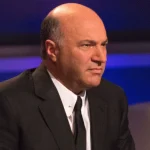

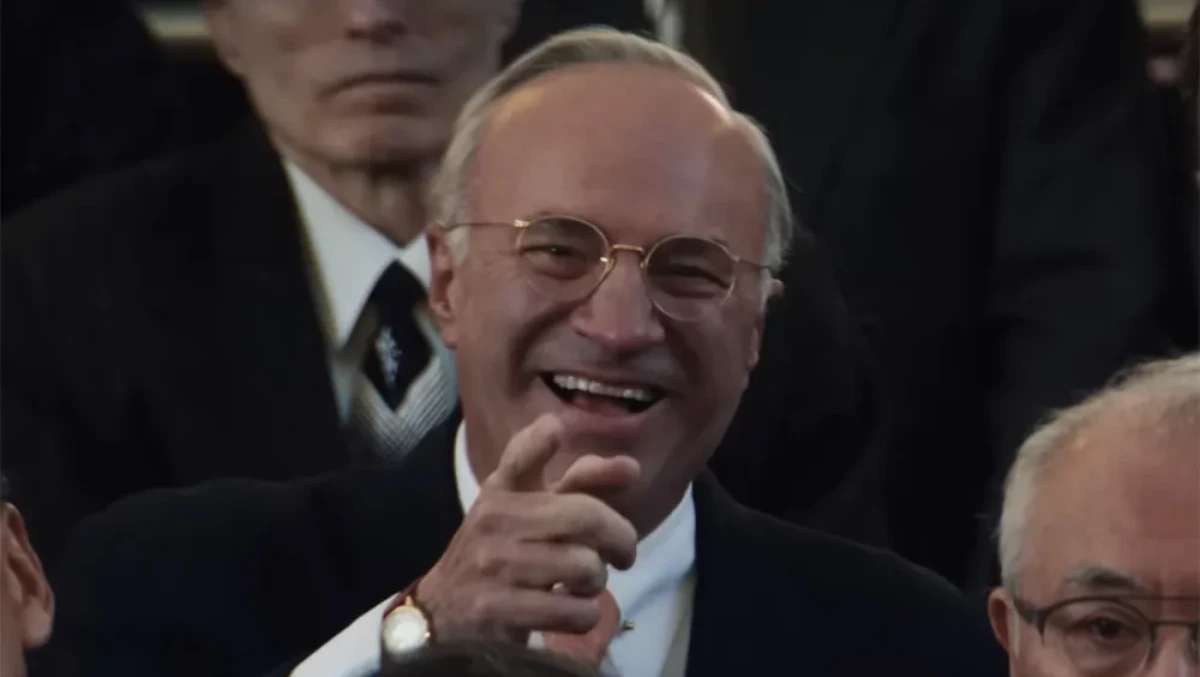
Back in October 2025, Kevin O’Leary from Shark Tank stirred up a lot of chatter with a bold claim. He suggested that relying on what he called “100 Norwell Tillies” could cut costs on background talent enough to fund two Marty Supremes.
(For those who don’t know, he meant to replace background actors with AI).
Time has passed since that incident, and O’Leary now sounds more reflective. After working with industry giants like Josh Safdie, Darius Khondji, and Timothée Chalamet, Kevin has changed his views on the involvement of AI in the arts.
Kevin O’Leary now wants to do away with being perceived as a spokesperson for AI.
Kevin O’Leary Rethinks AI Actors
The comments come from a recent conversation between Kevin O’Leary and The Hollywood Reporter. Kevin O’Leary claims his words were misinterpreted in the wrong way.
From his perspective at the time, using substitutes to fill out a scene has been part of filmmaking for decades. Looking back to shoots he worked on in 1984, he remembers arenas padded out with cardboard cutouts to create the illusion of a full crowd.
Kevin was living under the assumption that this was a practical production trick. He even points to classic cinema to support the idea, mentioning that large-scale films like Ben-Hur relied on similar visual shortcuts. His argument is that the industry has always found creative ways to solve practical problems.
O’Leary frames it by saying, “You didn’t make people sit there for 16 hours” just to complete a background shot. The intention, as he describes it, was always to find a workable shortcut that spared people from an exhausting process.
Looking at today’s tools, he adds that “I think we would do that with AI and it would be the same thing.”
His comments hint at a softening stance. He seems to acknowledge that when real people step into smaller roles, the impact is different. That human presence carries a quality that an algorithm still cannot fully reproduce.
How Marty Supreme Changed Kevin O’Leary’s Approach to Acting
Marty Supreme also represents a first for O’Leary as a film actor. Until now, most of his screen time came from reality television, where he says they would “bang out multiple episodes in one day.” A reality TV filming environment leaves little room for the slower, more deliberate process that filmmaking often requires.
A movie like Marty Supreme operates in a completely different way. It depends on the work of dozens of craftspeople who spend long hours shaping costumes, sets, and performances to capture specific moments in history.
The work is more careful, collaborative, and detail-oriented. It asks for a level of detail that reality TV simply does not aim to deliver.
In his interview with Hollywood Reporter, Kevin further elucidated his changed perspective.
He said, “What specifically changed my view was the fact that so many of the improvised lines made it into the final cut. That only happens in the magic of 4 a.m., when somebody says something that the other actor riffs off of.”
Why AI Cannot Replace Extras in Film Scenes
Kevin also admits he has no interest in performing opposite a digital stand-in. As he puts it, “I don’t know how you can do it any other way than just have those actors in that moment.”
Kevin rightfully understood and acknowledged that the exchange between performers depends on timing and shared presence. It is not something that can be faked.
He draws an even firmer line when it comes to scenes involving background actors interacting with leads. “If an extra is in an interaction with the principal, you can never use AI because you’ll never have the cadence,” he says.
In classic O’Leary style, he is blunt about the future too, adding that “it won’t work next year. It won’t work the year after that.”
Kevin O’Leary’s Shift From Tech First Thinking to Creative Reality
Working closely with artists and filmmakers appears to have reshaped O’Leary’s thinking. Seeing creativity unfold on set showed him that performance is built on instinct, trust, and human connection. It does not work on efficiency alone.
AI can support the process, but it cannot replace real actors or the messy, unpredictable moments where real art takes shape.
It is hard to see creativity as something software can stand in for.