
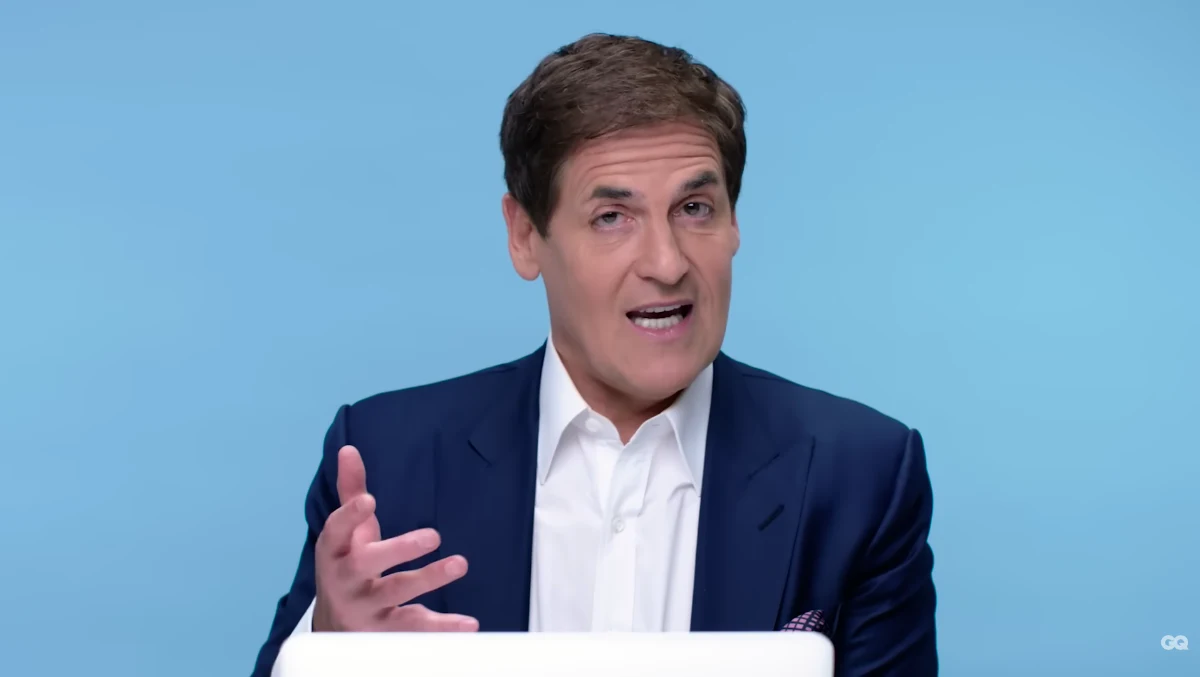
Mark Cuban has drawn criticism after sharing his views on how artists should approach artificial intelligence. He has been excessively positive about AI for some time now. He often talks about it as a practical skill and a real way for younger people to earn a living right now.
Mark sees learning to work with these tools as simply smart business and a sign of where things are headed. But that is the fatal flaw in his argument, as per the artists. Art is not a business or a commodity to be mass-produced.
The issue this time is who the message was aimed at. Artists are already dealing with fears about their work being copied, devalued, or replaced.
When a billionaire investor weighs in with optimism and strategy, it can land as dismissive rather than helpful. Instead of easing concerns, his comments seem to have deepened the gap between tech boosters and the people whose livelihoods feel most at risk.
Mark Cuban’s AI Reality Check
Cuban told writers and creators that they ought to embrace artificial intelligence. He did so in a tweet shared on X on December 14, 2025. The Shark Tank investor framed it as something artists should be excited about and not wary of.
He went on to say that AI cannot invent creativity where none exists. Instead, he argued that it gives people who already have a way to push their ideas further and work at a much larger scale.
Mark believes AI has made producing content easier and more accessible than ever. He explained himself by saying, “Ninety-nine percent of content fails. With AI, the cost and time it takes to experience and learn from those failures drops like a rock.”
Why Mark Cuban’s AI Views Are Drawing Criticism
Mark Cuban’s remarks didn’t sit well with many creators, prompting criticism and pointed questions about his personal stake in AI.
Cuban has invested heavily in the space, backing companies like Genetesis, Phaidra, and Samaya AI, as reported by GOBankingRates. The same research shows that around two-thirds of creatives worry about their job security as AI becomes more widespread.
A Divided Response to AI in Creative Work
One critic challenged Cuban directly, asking why he was telling artists how to think. They accused him of seeing profits and value while ignoring concerns around theft, exploitation, and lost jobs.
Another critic replied to Mark’s tech approach to the arts, saying, “Mark, you’re assuming that creating art is like running a business. You’re not looking for efficiency. Sometimes the best work happens during the process. No one has to paint with oils, or etch metal or stone, or sculpt from marble to get an image or a statue. But we do.”
Some also understood his point. One Cuban fan said, “Mark’s right. AI is a tool, not a takeover. Like search, design software, or analytics before it, it doesn’t remove authorship; it removes friction. We adopted AI early, and it didn’t cut jobs; it created them. Strategy, creative direction, QA, client advisory.”
Another commenter agreed with Cuban, saying that creative work is moving toward faster cycles of experimentation, in which ideas are quickly tested and just as quickly abandoned.
Art as Expression vs Art as Output
The disagreement also exposes a deeper fault line. Many artists see creativity as an act of expression, shaped by time, trial, and personal struggle. The value often lies in the process itself, not how quickly something ships or how widely it scales. Time spent struggling with an idea often shapes the final work.
Cuban’s framing treats creativity more like output to be optimized. It deems it as something where speed, scale, and iteration matter most. That mindset fits technology and business well. But it sits sourly with artistic practice. Meaning in art and creativity is often found in the slow, uncertain path rather than the end result.
The Future of AI in Creative Industries
Cuban’s comments have sparked a clear divide, and the debate is far from settled. AI is already creeping deeper into creative work, raising real questions alongside new possibilities. What it means for creators day to day will only become clear with time, as the technology and the people using it continue to evolve.
Mark’s arguments apply a very capital-maximisation approach to arts and creatives, and that is not how these things work.