
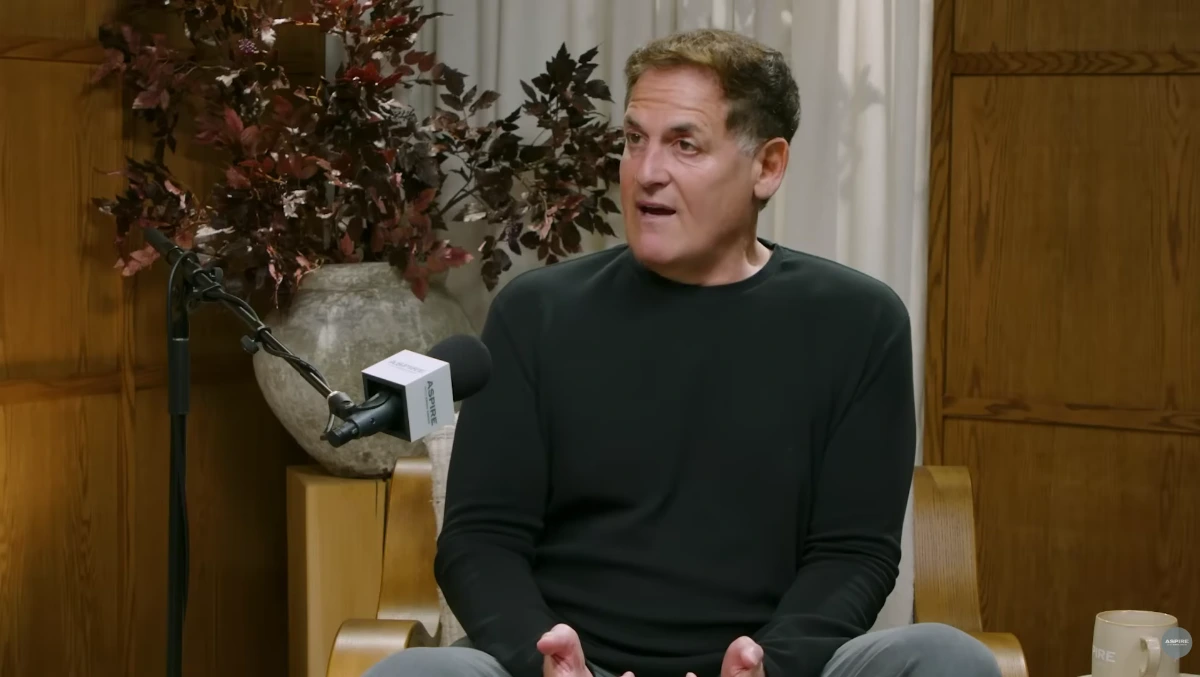
Mark Cuban once explained on a recent TikTok video that phone calls are not his thing. He said he prefers to keep conversations in writing. Email works better for him because it fits his schedule and lets him respond thoughtfully. He made it clear that this is not a rare habit. It is how he handles most of his communication.
He also sounded confident about it, saying he has a lot of practice and knows how to do it well.
Mark Cuban on Email Communication
Even without Shark Tank or the Mavericks on his plate, Mark Cuban stays very busy. A lot of his time and energy now goes into Cost Plus Drugs. The Shark Tank investor is now working on changing how people pay for their prescriptions.
He stays closely involved with many of the startups he backed over the years at the same time. Cuban acts as a mentor, an investor, and a sounding board for founders who still lean on his experience. Cuban’s preference mirrors a broader cultural shift.
Why Phone Calls Make Many Young Adults Uneasy
Nearly one out of every four people in Gen Z say they avoid answering phone calls, according to a 2024 study. The issue has become visible enough that a university in the U.K. started offering a class to help students get past that fear.
It is tempting to laugh at younger workers for their odd habits at work, yet for some people, the discomfort around phone calls runs much deeper. The fear even has a name, telephobia. It describes a real anxiety response tied to using the phone.
Health sources like Verywell Mind explain that it can trigger physical reactions such as a racing heart, nausea, trembling, and difficulty focusing.
The Quiet Rebellion Against Hustle Culture
An anthropologist who studies consumer behavior has suggested that this trend reflects a wider burnout with constant urgency. Zoia Tarasova from Canvas8 once explained to Fortune that many people feel worn down by the push to always be fast and always be available.
She said the slow response to phone calls can be a subtle way of pushing back, as people choose to move at their own pace instead of reacting instantly.
How Email Fits Into Modern Business Habits
Some executives say this fear of phone calls is starting to show up in their revenue. A few leaders have told Fortune that it affects how their teams perform. Casey Halloran, who runs the travel company Namu Travel, said he has never seen a gap like this in his 25 years in the industry.
Older agents are comfortable calling customers, while many younger ones avoid it. He shared that addressing this has become a regular, awkward topic of discussion within the company. Managers noticed that younger agents handle fewer than half the number of calls their more experienced co-workers do.
Halloran said the company has tried a long list of fixes. They have rolled out training programs, offered rewards for making calls, paired newer staff with experienced agents, and even brought in a business psychologist to help.
He told Fortune that after more than two years of trying to change the behavior, the team is close to giving up on pushing phone calls at all. They are now seriously considering leaning into text messages and web chat instead of continuing a fight that feels harder every year.
Why Does Mark Cuban Prefer Email Over Phone Calls?
Cuban has also shared a practical reason for sticking with email in his own work. Written messages leave a clear record he can return to later. He once explained that when a conversation lives in his inbox, he can easily look it up again whenever he needs to remember what was discussed or agreed on.
The Pros and Cons of Replacing Calls With Messages
Using email instead of phone calls comes with trade-offs, as most work habits do. A study from the recruiting firm Robert Walters found that a majority of younger professionals think messaging or email is the most effective way to move work forward.
Many of them see calls and meetings as slow or unnecessary. That mindset is often summed up by the familiar joke that a lot of conversations probably should have stayed in an email thread.
Emilie Vignon from Robert Walters wrote in the 2024 report that younger workers do not feel the need to sit through long chats in cafés or restaurants when the same conversation can happen online in minutes.
She made the argument that relying only on messages can leave gaps. Some issues are easier to handle when people can talk them through or see each other in real time.
Vignon’s point was that human presence still carries weight. The quiet signals in how someone speaks, moves, or reacts shape understanding and relationships in ways that are easy to lose once everything moves to a screen. The humane essence gets lost in translation.
Finding The Right Balance Between Calls and Emails
Academic and industry research still makes a strong case for phone calls in certain situations. Studies from UT Austin, the University of Chicago, and McKinsey suggest that speaking live often clears up confusion faster than sending messages back and forth. That speed matters as inboxes keep growing and workers already spend a large share of their day dealing with email.
At the same time, research from DePaul’s David J. Bouvier in 2022 points out that written communication has its own value. It facilitates easy sharing of details. People get space to respond without pressure. In turn, this makes work feel less stressful.
Why There Is No One Size Fits All Communication
As work evolves, so do communication habits. There is no universal rule anymore about how people should connect. The better approach is to match the method to the situation. Sometimes that is a call. Sometimes it is a carefully written email or a short text.