
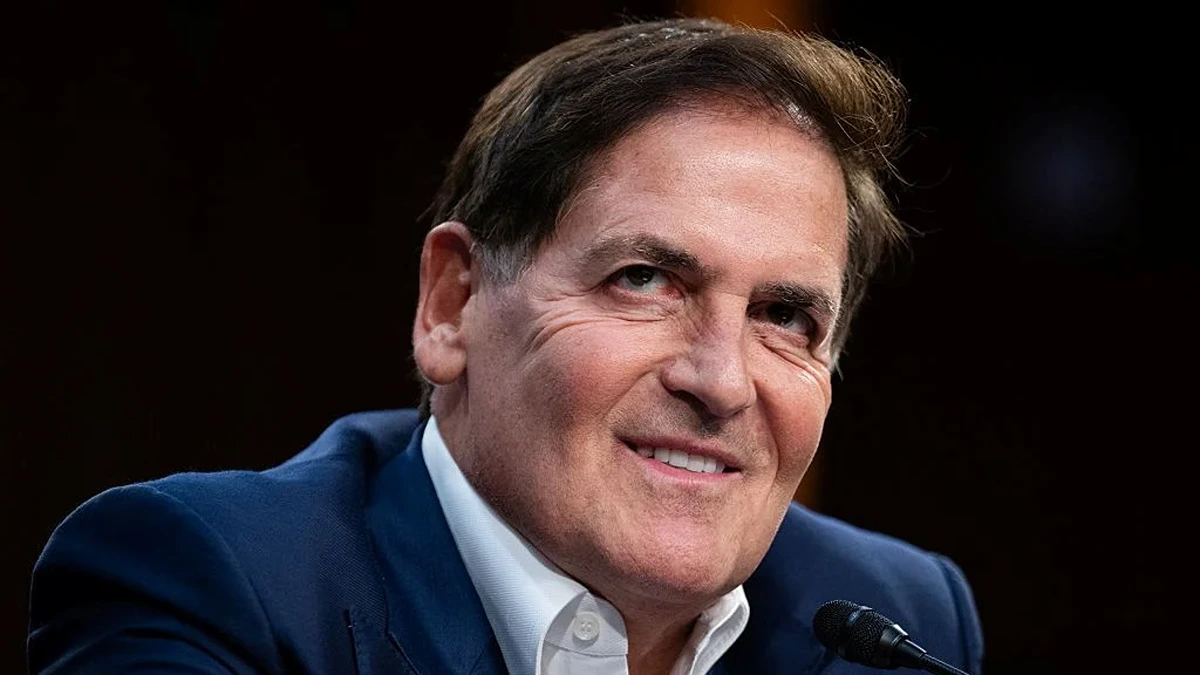
Recently, Mark Cuban, a billionaire entrepreneur and the owner of Cost Plus Drugs, publicly called on the US government to eliminate the regulatory fee charged by the Food and Drug Administration (FDA). The steep fee is charged for approving generic drugs.
Mark argued in the US Senate Special Committee held in Washington, D.C. He spoke that these fees act as a major barrier to entry into domestic generic-drug manufacturing, which costs approximately $360,000.
Mark argued that when companies try to get several drugs approved at the same time, the cumulative cost could be huge. The steep FDA fee nearly destroys the economics of shifting production to America.
He even made a claim at the hearing that if the FDA decides to waive the fees, his company (Cost Plus Drugs) would consider making generic drugs.
Especially those drugs in which patients can save the most cost, including expensive rare disease treatments, generics, and other costly medications.
Cuban’s proposal showed a path to reshore the drug production to America. Further lowering the prices, increasing competition, and improving accessibility of costly generics.
Why Do FDA Fees Matter?
To understand why Mark Cuban made this argument, let’s look at the process of generic drug approval in America.
1. Entry Barriers by the Food and Drug Administration (FDA)
The enormous overhead charges that add up when a manufacturer wants to bring multiple generic drugs to market can reach tens of millions of dollars. This altogether discourages the suppliers and defeats the purpose of reshoring.
2. Economics Don’t Work For High-Marginal-Cost Production
Manufacturing generic drugs in the US-based plants is far more costly than overseas manufacturing. Consequently, higher upfront fees charged by the FDA worsen the economic scenario.
Mark also mentioned that a cheap generic medication, which sells for a few dollars, is not realistic to manufacture domestically. However, the math changes when barriers to entry are lowered for medicines priced up to $100.
3. Broader Impact On Competition & Supply
There is less competition in rare-disease generics, especially for niche markets. Therefore, this can further lead to price increases, shortages of supplies, and monopolistic competition. In short, the user fee structure used by the FDA becomes a prohibitive barrier to entry when multiplied by many drugs.
Cost Plus Drugs: Cuban’s Platform for Change
Cost Plus Drugs, which was founded by the celebrity investor on Shark Tank, Mark Cuban, in 2022, is an online pharmacy. Mark’s proposal was to enter the generic drugs market. The business model of CPD is to sell medicines directly to consumers, cutting out intermediaries and their markups, which hike prices.
The drugs that it sources from the manufacturers have a fixed markup, rather than any unpredictable rebates, including a modest fee.
Besides this, Mark Cuban’s proposed fee waiver by the Food and Drug Administration (FDA) is to expand CPD’s Dallas facility. The facility already manufactures injectables and hospital-use drugs. Thus, he aims to produce generic medications domestically within a year.
Furthermore, Cuban mentions that his company’s target market is niche, focusing on higher-cost generic drugs that cost over $100. Unlike the lower-cost drugs patients can afford at big-box retailers, Mark’s vision is to produce medicines for rare diseases.
At present, Cost Plus Drugs (CPD) sells drugs at a fixed 15% markup over the cost of medicine, including shipping and pharmacy charges. This mostly turns into cost savings for uninsured or underinsured patients.
Instead of just thinking about his own company, Mark’s push is for a system-wide change in the policy. This move could transform the manufacturing, selling, and pricing of generic drugs in the US.
Why Does This Proposal Matter for Patients, Health Systems, and the Industry?
Mark Cuban’s argument and proposal for the FDA have wide-ranging implications.
Lower Drug Prices For Patients
If the FDA lowers barriers to entry for manufacturers worldwide, they might start choosing to produce generic medications in the US, especially in scenarios where overseas manufacturing seems like the only option due to economics. In such cases, producers drive competition, and in return, competition lowers the prices of medicines.
For better accessibility of rare generic medicines serving a small population of patients, the fee waiver could turn manufacturing into a viable option. Particularly in such cases, the margins are very slim, and challenges are higher.
Shifting manufacturing to the domestic market eliminates or reduces the dependence on overseas supply. Also, it wipes out supply chain distribution and import challenges, which are some essential factors affecting the availability of drugs.
Shifting Industry Economics & Manufacturing Landscape
Reshoring the manufacturing of generic medicines lowers the entry barriers, further encouraging pharmaceutical companies to expand their production facilities. Overall, it broadens the industrial mission of bringing manufacturing home.
Higher upfront costs favor large pharmaceutical companies, thereby increasing monopolistic behavior. However, if the fee is waived, it can enable startups and smaller companies to innovate new drugs for rare disease treatments.
Dominant players in the generics market, who mostly rely on economies of scale and lower-cost global production, might face increased competition. This could lead to price wars, lower margins, or push incumbents to restructure.
What Could It Mean?
If regulators adopt Mark Cuban’s proposal, it could be a watershed moment for generic medications in the United States. Lowering the entry costs could incentivize large and small manufacturers to develop domestic facilities, making America more reliant.
In addition, if accepted, this proposal will particularly help patients requiring costly generic medications. The increased competition will further reduce the prices significantly.
With business models like Cost Plus Drugs (CPD), consumers will begin to see more predictable pricing, a departure from the traditional opaque, rebate-driven process.