
Television reality shows, such as Shark Tank, attract much attention to the entrepreneurs’ net worth.
Undoubtedly, their fortunes and million-dollar enterprises have been the central reason why new-age entrepreneurs enter the Tank with bold ideas. They trust the Sharks, who have turned million-dollar empires into billion-dollar ones and now invest in innovative products and services. The Sharks’ financial standing talks a lot about their strategies.
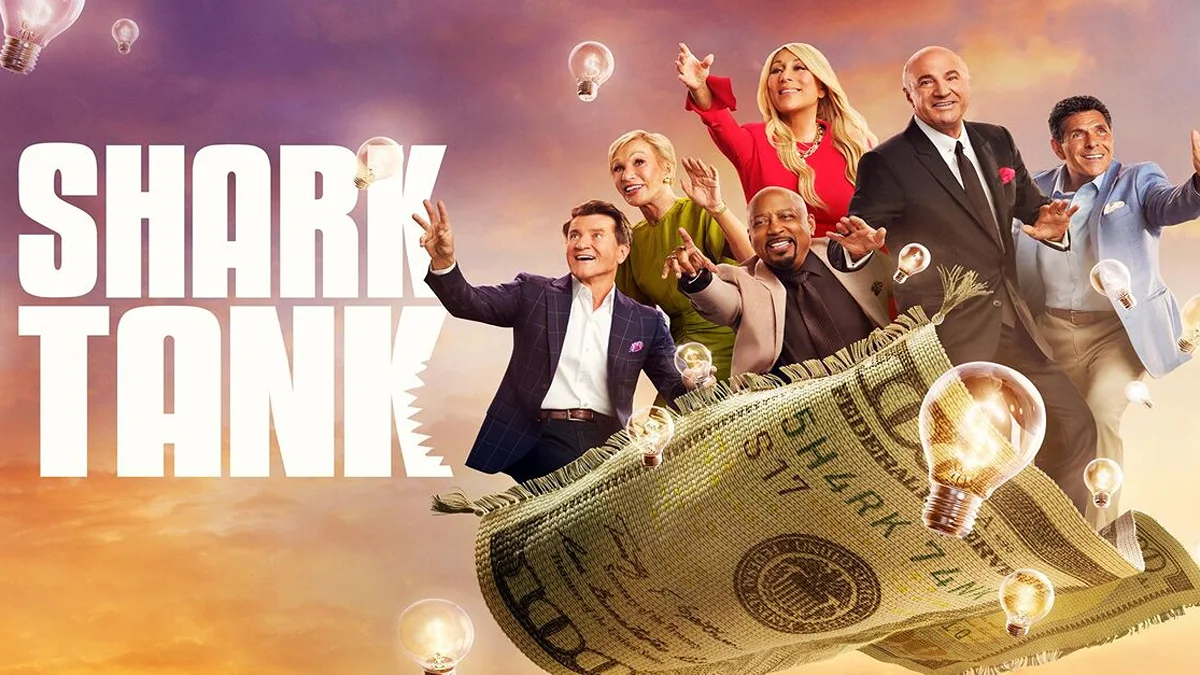
Here is a breakdown of the net-worth ranking of Shark investors for 2025, as per the celebrity-wealth estimates.
Mark Cuban: The Billionaire Tech Mogul
Mark Cuban, the billion-dollar investor and entrepreneur, stood at the top of the Tank’s wealth leadership list. He has a net worth between $6 billion and $6.5 billion as of 2025 projections.
During the dot-com boom, Mark was also there, and he founded a tech brand, Broadcast.com, and years later it was acquired by Yahoo at a $5.7 billion price. Mark was always a person who enjoyed sports; as evidence of this, he purchased the Dallas Mavericks and later sold its majority stake for $3.5 billion.
Though he ensured that he still had the voting rights, retaining a minority ownership. Moreover, via this, he maintained his professional influence in the sports industry while retaining his wealth at the same time.
As per the recent reports, his investment portfolio spans healthcare, venture investments, and media. Due to this, despite investing tens of millions of dollars in startup deals, he mentions that the investments are not profitable overall.
Daniel Lubetzky: The Food Industry Visionary
Without any doubt, the next Shark on the list is Daniel Lubetzky, who has an estimated net worth of over $2.3 billion. Certainly, Daniel Lubetzky’s wealth came particularly from his brand Kind Healthy Snacks, which he co-founded in 2004.
However, it was later sold to Mars in 2020. Instead of keeping a majority stake in the company, he gave Mars the full majority stake. Cross-broader and social entrepreneurship and trade, his early companies paved the way for a distinguished business philosophy, further blending purpose with profitability.
Although once a Shark Tank guest, Lubetzky became a full-time Shark at the start of Season 16, further bringing his mission-driven investment style.
Robert Herjavec: The Tech Security Entrepreneur
One of the most distinguished investors on the list is Canadian entrepreneur Robert Herjavec. However, his net worth is not anywhere near that of Mark Cuban or Daniel, as his estimated net worth is approximately $600 million.
Besides the Herjavec Group, which is a major cybersecurity company, he developed his wealth by launching BRAK Systems. Later, he sold it to AT&T for approximately $30 million and has made his wealth selling and developing tech security firms.
He has been one of the prominent Sharks since the start of Shark Tank Season 1. He used his tech background in enterprise sales and cybersecurity to invest in innovative startups.
Daymond John: The Fashion Branding Expert
After Daniel comes Daymond John, who has an estimated net worth of over $350 million. He is a branding and fashion entrepreneur, which lands him in the mid-tier of the Sharks’ net worth. In the late 1990s and 2000s, Daymond John founded a streetwear brand, FUBU, which is now a global sensation.
Daymond John most often evaluates deals he makes on the Tank through his eyes on licensing, retail expansion, and branding. These are some of the areas where his FUBU experience can pay off.
Lori Greiner: The Queen of QVC
Lori Greiner, with a net worth of approximately $150 million, remains among the most prominent consumer-product inventors on the Shark Tank panel.
One of the early earring organizers, launched in 1996, was one of those moments that sparked her licensing and manufacturing future. She is referred to as the Queen of QVC because Lori developed her career via dozens of licensed and patented products.
As of today, Lori holds more than 120 design and utility patents and has starred in Clever & Unique Creations.
Lori Greiner became a part of Shark Tank in 2012 and was known for his investment in Scrub Daddy, the biggest hit in the history of Shark Tank.
Barbara Corcoran: The Real Estate Icon
The real-estate mogul Barbara Corcoran has a net worth of approximately $100 million. The Corcoran Group, founded by Barbara, is one of the top-notch real estate firms, which was further sold to NRT in 2001 for approximately $66 million.
Her experience in branding, sales, marketing, and entrepreneurial spirit made her one of the best Sharks for the reality show Shark Tank, which launched in 2009. Since then, she has made one of the most profitable deals on the Tank, such as The Comfy. Also, she has invested in over 124 companies and approximately $62 million.
Why Is the Wealth Gap Among Sharks So Wide?
Undoubtedly, one of the most significant facets of the Shark Tank’s lineup is the dramatic divergence in the net worth of these Sharks.
Though most of them are very successful Shark Tank entrepreneurs and investors, their journey went through different stages and industries in American history. This breakdown explains why the difference in net worth is so wide.
1. Scale of the Original Business Exit Matters Most
Significantly, the greatest driver of the gap between the net worths is how large and early the Sharks made their first exit.
- As we have seen and witnessed during the dot-com boom, people became billionaires overnight, despite its dark reality. Henceforth, the sale of Broadcast.com to Yahoo made a major difference in Mark Cuban’s net worth.
- On the other hand, Sharks like Daymond John and Barbara Corcoran developed companies that grew steadily. However, these companies were very profitable, though they did not produce billion-dollar returns.
2. Industry Differences Create Unequal Upside
The Sharks’ background reflects a stark reality that not all industries scale in the same manner.
- Robert Herjavec uses technology and social media to bestow exponential global reach, growth, and great acquisition multiples.
- Consumer-based products, real estate, and fashion need physical inventory, distribution methods, and slower expansion. Furthermore, this limits upside, irrespective of strong margins.
This stark reality highlights the fact that entrepreneurs who invest in technology-based companies are more likely to succeed than those in consumer product or service-based sectors.
3. Timing and Economic Cycles Played a Major Role
It is significant to know how Sharks have built their fortunes, as this inspires the upcoming entrepreneurs on the national television reality show.
- In the late 1990s, valuations were historically very inflated as Cuban’s growth was aligned with the 1990s dot-com boom.
- Sharks like Barbara and Lori built their fortunes in already crowded markets, in which competition was higher, and valuations were tight.
In fact, if you are in the right industry at the right economic moment, you can quadruple your wealth in many ways, which wasn’t possible later.
4. Ownership Retention vs. Early Dilution
Another significant factor that defines the success of a Shark as an entrepreneur was the amount of ownership they had.
- Sharks who retained large percentages of their equity stakes via exit events saw huge paydays.
- In the meantime, other entrepreneurs choose to sell portions of their companies to fund scale and expansion. Conversely, it reduces their personal net worth.
For example, selling a majority stake early can de-risk a business—but it also caps upside.
Takeaway
This broad gap between the net worth of various Sharks is not concerned with effort or intelligence. Rather, it is about timing, ownership, risk exposure, and choice.
Nevertheless, consumer and service-based products developed by smaller fortunes, while tech exits created billionaires. These differences between the Sharks make Shark Tank compelling for entrepreneurs.