
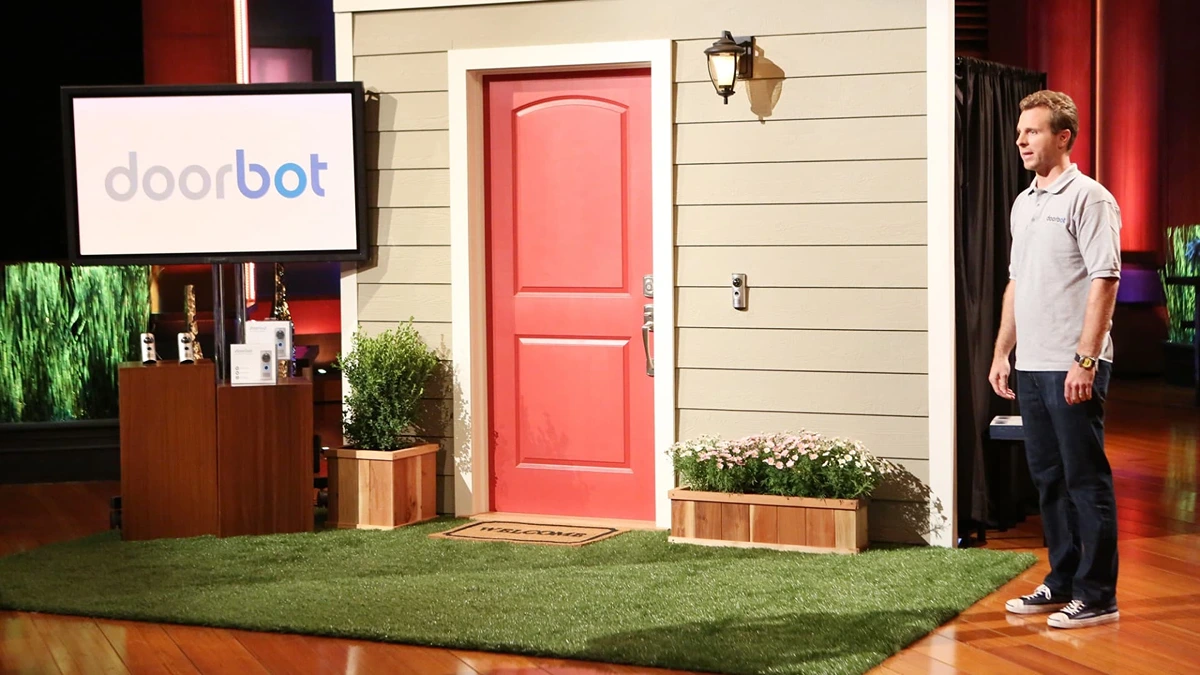
In Shark Tank Season 5 Episode 10, which aired on November 15, 2013, Jamie Siminoff stepped in front of the investors with a device called DoorBot. He described it as the first smartphone-connected doorbell. He built it to let homeowners see and speak with visitors through their phones from anywhere.
The founder came in seeking a $700,000 investment in return for a 10% stake in the company.
How Jamie Siminoff Built DoorBot in His Garage
The concept had been born years earlier in his own garage. While working in his garage, he missed someone at the front door because he could not hear the bell. Jamie had recently begun using a smartphone and assumed a WiFi-enabled doorbell already existed. It did not.
So he went on to build one.
Using a small camera and basic parts, he created a working prototype and installed it on his front door. It was rough but functional. When his wife said the device made her feel safer, he saw the bigger picture. The product was designed to give people more control over their home security.
How DoorBot Prepared for Shark Tank Season 5
A few years after building the first version, the team launched a pre-sale on Kickstarter. The campaign picked up momentum and proved there was real demand. That traction opened the door to something bigger. In November 2013, the product was taken onto Shark Tank.
He saw Shark Tank as the Olympics for founders. It was a shot at national exposure and instant credibility. He prepared like an athlete, rebuilt the show’s set in his backyard, and invited neighbors to fire tough questions at him. He practiced his pitch over and over until it felt second nature.
Producers warned him that the Sharks would interrupt and talk over each other. The segment had to be sharp and engaging. A slow pitch would never make it to air. He studied nearly every episode of the show. He replayed the pitches he admired and broke down what made them work.
When he finally stood in front of the investors, everything felt surreal. The stress peaked during the live demo. The product was still in the early stages and not yet in mass production. There was no room for error. When the demo worked, he felt certain a deal was coming.
Like many founders, he believed deeply in his outcome. He was convinced Mark Cuban would invest. Within minutes, that confidence was tested when Cuban decided to step away.
What Happened To DoorBot After the Shark Tank Rejection
After filming Shark Tank and walking away without a deal, Siminoff braced for disappointment. He even worried the episode might not air. When it finally did, the public response erased those doubts. Instead of seeing a novelty item, people saw a practical security solution.
At the time, the team was still small and operating out of a garage. It was late 2013 and the holiday season was close. He knew they had one year to refine the product and come back stronger.
Transition from DoorBot to Ring
In October 2014, DoorBot was reintroduced as Ring. The updated version offered sharper video, motion alerts, and cloud storage. The rebrand marked a turning point. The product felt more complete and ready for a larger market.
By the time the 2015 Consumer Electronics Show opened its doors, the category had exploded. Dozens of similar doorbell devices were on display. The market had caught on quickly. Ring’s early relaunch gave it an edge and valuable momentum.
The relaunch quickly translated into explosive growth.
Concurrently, revenue hit $30 million in 2015, grew to $170 million in 2016, and reached $480 million in 2017 (as commented by the founder). In the summer of 2015, while raising capital, Richard Branson joined as an investor. During the two months of discussions, monthly revenue doubled from $1 million to $2 million.
The $1 Billion Amazon Exit of Ring
The company was growing at a pace that felt almost out of control. Sales kept rising, but so did the pressure. Every day was about keeping operations steady and making sure supply matched demand.
That wave of growth led to a deal in early 2018 when Amazon acquired Ring. The team believed Amazon understood the long-term vision. Jeff Bezos saw the scale of the opportunity.
Rapid expansion had created tough financial decisions. Hardware requires large orders placed far ahead of actual sales. The company often had to commit huge amounts of cash before knowing how the market would respond. If demand dipped, the excess stock could cause serious problems. If they ordered too little, they would miss sales. It was a constant risk.
With Amazon’s backing, that risk became manageable. A company of that size could handle swings in inventory and cash flow. The acquisition gave Ring stability and room to grow without the same fear of running out of runway.
What Jamie Siminoff Did After Selling Ring to Amazon
After the 2018 acquisition, he stayed on and joined Amazon to keep building the product. Many people assume a founder checks out after a sale. That was not Jamie’s reality. The company was still growing at triple-digit rates. He stayed in founder mode and worked harder than ever.
The workload did not ease up. If anything, it intensified. He was now operating inside a much larger company, but he still approached it with the same urgency he had in the early days. By 2023, the business had become profitable. That milestone meant a lot to Jamie. It proved the model worked at scale.
How AI is Shaping the Future of Ring
Then AI began reshaping the tech landscape. As he watched its progress, Siminoff saw clear ways it could transform the product he knew so well. The idea of pairing that deep experience with new AI tools was hard to ignore.
AI eventually became part of both customer features and internal workflows. Development cycles that once stretched for years were shortened to months. It marked a new phase, driven by speed, efficiency, and fresh energy.
Leadership Lessons From Ring’s Founder
As businesses scale, it is easy to drift away from the people who actually use the product. Jamie Siminoff works hard to prevent that. When something goes wrong in customer service, he pays attention. Accountability starts at the top.
As for the future, the focus stays close to home. Ring is meant to protect the space around a house and the people inside it. The goal is to make the experience feel personal and useful. Users should control what they see and when they see it. A simple alert when a child gets home can mean more than a flood of notifications, as per the founder.