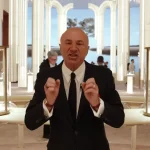

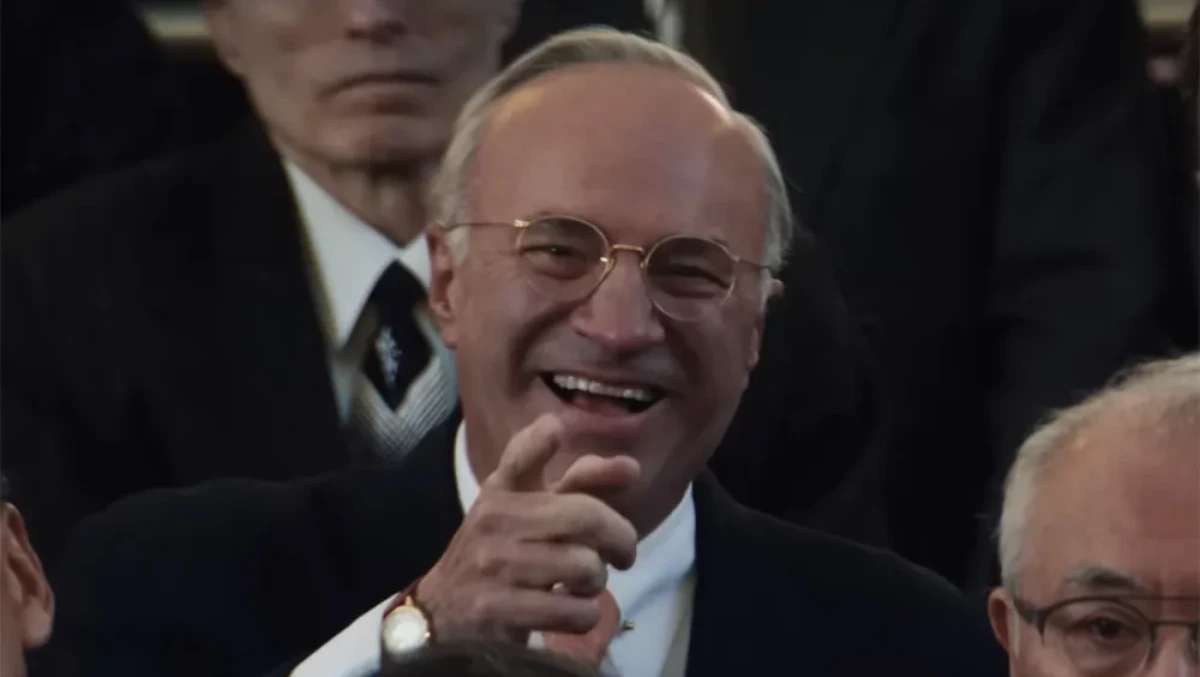
Most people know Kevin O’Leary as someone who runs the room. He’s direct, he’s firm, and he’s rarely in the background. A film set flipped that dynamic around. Instead of leading, he had to fit into someone else’s process.
While working on the upcoming A24 movie Marty Supreme, he wasn’t the boss, the judge, or the deal-maker. He was just another member of the cast alongside established actors like Timothée Chalamet.
On a film set, someone else decides where you stand, when you speak, and how you deliver each line. O’Leary had to trade his control for direction and timing.
It put him in a setting where he couldn’t rely on status or control. He had to pay attention, take cues, and work with others instead of leading them. That shift was new for him, and it changed how he approached the whole experience. He had to endure between the conflict between entrepreneurial authority and creative submission.
Kevin O’Leary Film Set Shock
Kevin O’Leary has been wealthy for decades and has built his reputation by backing companies and making tough calls. His big break came in the late nineties when he sold his Softkey tech business for a massive payout.
Since then, he’s kept busy putting money into dozens of startups on Shark Tank, shaping many early-stage businesses along the way.
Acting asked something very different from him. In Marty Supreme, he plays a sharp, intimidating tycoon facing off against Timothée Chalamet’s character. Yet once the cameras rolled, his usual status didn’t matter much. He wasn’t the one steering the process. He had to follow directions, fit into someone else’s plan, and let the story guide him instead of his own instincts.
In conversation with Variety, Kevin said, “I learned my lesson that film sets are not democracies. I’m not used to being told what to do. I do the telling. We shot something 20 times, and I said to Josh [Safdie], ‘OK, I think we got it. We can move on.’ He said, ‘What the f*** are you talking about? There’s no moving on until I say we’re moving on.’”
Kevin O’Leary’s Creative Input
Even though he wasn’t running things on set, the filmmakers still listened when O’Leary had thoughts about his role. Safdie and writer Ronald Bronstein were open to shaping the character with his input, especially when it felt close to how he sees himself.
That led to one of the film’s stranger and more memorable moments. His character tells Marty Mauser that he’s a “vampire” who’s been around since the early 1600s. It’s a bold, slightly absurd speech that adds color to the scene and gives the character a sharper edge.
How Kevin O’Leary Chose the Watches for Marty Supreme
He didn’t stop at the script when it came to shaping his role. O’Leary also got involved in the way his character looked, starting with the watches. He knows his way around fine timepieces, so he chose both for himself. One to match New York time and one set to Tokyo.
Mr. Wonderful wasn’t interested in wearing a fake prop or something pulled from a costume rack. If it was going on his wrist, it had to be real, and it had to be his. That pushed him into tracking down the right models from around the world so they would feel true to the period and the part.
Rather than browsing listings or working with brokers, he reached out directly to the watch companies. That’s how he secured a Patek from the fifties, even though it stretched his budget. The Seiko from that period was much more difficult to obtain and took longer to track down.
After a long search, the Seiko company stepped in and tracked one down from its own collection and offered it to him. He later joked in an interview with the New York Times that it may have come from a museum somewhere, and seemed both surprised and grateful that the search finally paid off.
Kevin O’Leary’s Issues With The Marty Supreme Ending
Kevin wasn’t fully sold on every part of the movie. The main thing that bothered him was the way his character’s story ended. It didn’t sit right with him, and he thought it pushed things too far.
He later said the climax felt unfair, especially given how the character had been built up earlier in the film. It was the one part of the project he openly questioned.
O’Leary described a few tense back-and-forths with Ronald Bronstein over how the character was written. From O’Leary’s point of view, Rockwell wouldn’t sit quietly while someone took advantage of him, and he felt the script let that happen too easily.
The Shark Tank investor said he told the writers that the situation didn’t ring true and that the character should have faced or delivered stronger consequences.
Not everything O’Leary floated made it into the movie. He and the team talked through a few alternate ways to close the story. O’Leary even suggested a much darker turn to raise the emotional stakes at the end.
That version would have added a heavy personal loss for Marty, something he felt would cut against what he saw as an overly gentle wrap-up. The director thought it through, then decided it went too far and left it out.
How Kevin O’Leary’s Reputation Led Him to Acting
He’s rarely been in a position where he answers to someone else. By the time he sold SoftKey, the company had already rolled up several competitors and grown into a major player in consumer software.
It employed about two thousand people at that point, and O’Leary was leading the whole operation. Being a regular employee was never really part of his story.
Why Josh Safdie Cast Kevin O’Leary in Marty Supreme
Director Josh Safdie didn’t find Mr. Wonderful by accident. He went after him because of the blunt, sharp-edged image he’s known for on Shark Tank. That reputation was a big part of why Safdie thought he fit the role of Rockwell.
O’Leary later said the director wanted someone who felt real in that kind of role, not a softened version of it. It was the same quality that first made him stand out on television, and the reason Safdie reached out in the first place.
Safdie even flew out to meet him in person, taking a private plane up to O’Leary’s place by the lake in Canada so he could watch him read for the role. That meeting helped seal the deal.
O’Leary has said he’s open to more acting down the line, once the film’s press run settles down. He seems comfortable playing the bad guy, and he’s joked that a classic spy movie villain would suit him just fine. He joked in an interview with Vanity Fair that leaning into his tough image is opening doors he didn’t expect.
For someone who’s built his career on control, this project asked him to let go more than he ever has before.