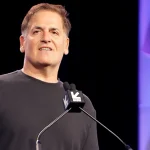

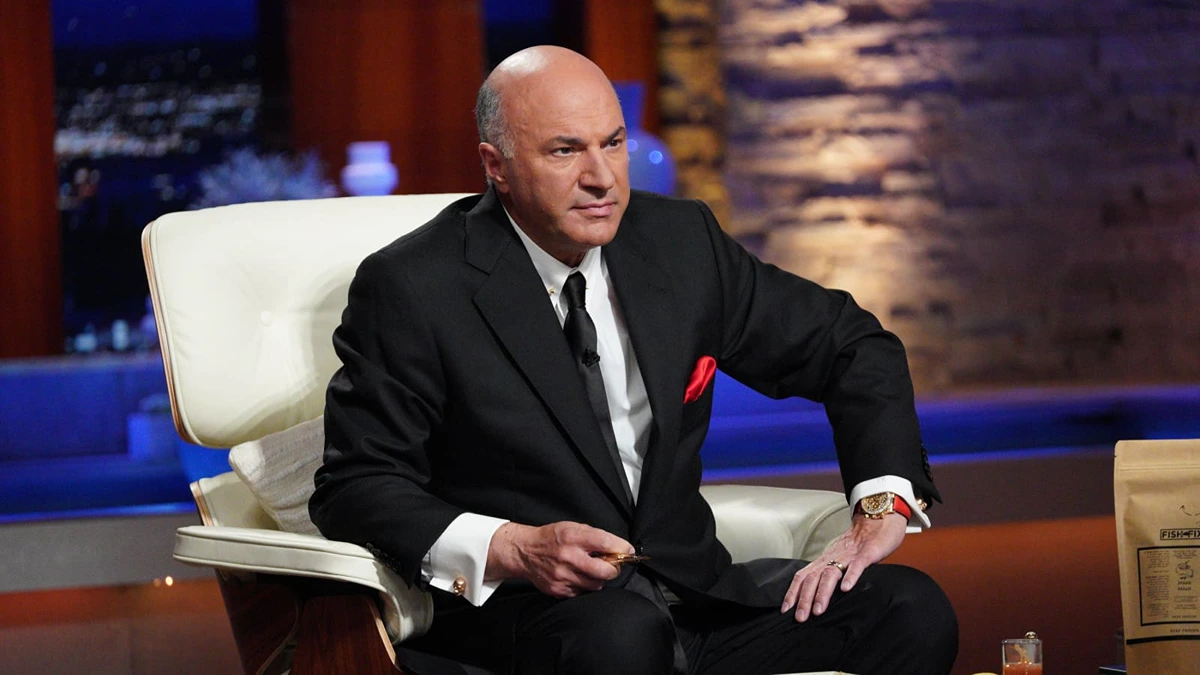
On this Sunday, Kevin O’Leary, best known as a celebrity investor on the reality show Shark Tank, delivered a speech warning about the state of the US economy.
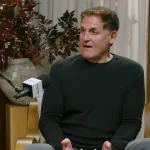
In a recent episode of The Big Money Show on Fox Business, Mr Wonderful said inflation acts as a hidden tax on Americans. He explicitly explained that pushing the Federal Reserve to cut interest rates when inflation is high could be a disaster.
As we know, Kevin O’Leary is sharp when it comes to numbers. In this blog, we will unpack Kevin’s framing, identify the risks, and examine what this debate reveals about inflation.
Inflation as a “Hidden Tax”: What O’Leary Means
Kevin used the metaphor of a “hidden tax” when discussing inflation. It was his style of conveying to Americans that everyday commodities cost more than they used to. Consequently, inflation slowly erodes purchasing power, often without people’s awareness.
Inflation tends to reduce the value of money, unlike income tax. Income tax often comes with bank statements, percentages, and bills. Meanwhile, if the prices of food, electricity, or housing increase, households with lower incomes have to pay more without a tax bill.
O’Leary sparks a debate on The Big Money Show, highlighting the fact that inflation disproportionately overburdens fixed-income households, savers, and middle-income families.
For Americans struggling with everyday expenses, this viewpoint is powerful. Thus, it shows that these random price hikes are a structural problem that demands a systematic response.
Why Lowering Interest Rates Now Is Risky According to Kevin O’Leary
Kevin O’Leary also states that, as long as inflation is not under control, pressuring the Federal Reserve to cut rates could be dangerous.
Here’s how he breaks down the risk.
- Fueling inflation: Lower interest rates increase demand for borrowing at lower rates. This increases spending and raises prices. If the inflation rate is more than 3%, any changes in the monetary policies could have a counter-effect.
- Undermining the Fed’s credibility: As mentioned above, the independence of the Federal Reserve is non-negotiable. Any pressure on the Fed will wipe out trust among global investors.
- Prompting a policy disaster: According to Kevin O’Leary, if the Fed cuts rates prematurely, it could further trigger an endless loop of volatility, uncertainty, and erosion of savings, especially when inflation is accelerating.
Despite all of this, tariff-induced cost pressures further complicate the inflationary process. Tariffs are usually passed on to the consumers. Hence, when the US government imposes tariffs on commodities such as aluminium, bauxite, and agricultural produce, it inflates prices.
View this post on Instagram
Wide Implications For Households, Investors, and Government
When a successful entrepreneur and a prominent investor frame inflation as a stealth tax, it shapes consumers’ perceptions. His recent argument is pushing people to bear the cost of living increases due to policy-driven challenges.
For Households
Consumers are now more cautious about borrowing money or taking on debt, even if the interest rates have reduced. This perspective shows that people now know that inflation wipes out the value of money.
Moreover, retirees and young people saving money in cash or in low-yield accounts lose their purchasing power more quickly.
Undoubtedly, wages may decline or stagnate, even if nominal wages remain unchanged, because inflation devours the buying power of consumers.
For Markets & Investors
Investments in startups, real estate, and other consumer-driven sectors slow down because of delays in rate cuts, which in turn makes borrowing expensive.
Organizations that are heavily dependent on cost-sensitive people will continue to struggle if inflation remains at its peak. On the contrary, long-term investors and Sharks might favor predictable rates, as they value avoidance of volatility.
For Policy & Governance
After this stark warning given by none other than Mr. Wonderful, consumer pressure will grow for more transparent communication.
The gap between lower-income and middle or higher-income families increases. Inflation hits lower-income households harder, while investors are better wrapped.
What Supports O’Leary’s View, And What Critics Might Say?
Let’s have a closer look at the supporting arguments of Kevin’s warning, and also see what critics talk about.
Supporting Arguments
- Many economists agree with the warning given by Kevin that inflation is like a de facto tax. Real incomes reduce when wages do not keep up with inflation, which hits hard on middle and lower-income families.
- History shows that inflationary loops and stagflation begin when monetary policies are changed before inflation drops.
- Some of the factors that drive inflation are commodity price shocks and disruptions in the supply chain. As said above, Kevin pointed towards tariffs and how they increase inflationary pressures.
Potential Criticisms And Caveats
- On the other hand, some economists reveal that in recent history, there have been rate cuts to prevent recession. So a modest rate cut of 25 basis points might not trigger any disaster, especially in a scenario when inflation is cooling down.
- Inflationary pressures on prices are not uniform, as some sectors may stabilize, while others may not. The warning highlights a one-size-fits-all approach, which is not the case.
- If the interest rates are high for a longer period, it suppresses growth, weighs on investments, and increases the cost of borrowing for both businesses and individuals.
A Reality Check
When Kevin O’Leary calls out inflation as a hidden tax that Americans have to pay, he draws consumers’ attention to the real-world consequences of economic policies. He makes it clear how inflation leads to higher grocery bills, higher housing costs, and wiped-out savings.
His warning on the Fox Business show is not about scaremongering. It is a wake-up call for policymakers to start considering long-term purchasing power and economic stability rather than short-term market reactions.