Fans tuning into Shark Tank Season 17 say the Sharks are cutting deeper with their critiques. The Pelagion Hydroblade pitch in Episode 1 is already fueling that conversation.
Pelagion Hydroblade made waves on Shark Tank Season 17 Premiere but failed to land a deal. As Shark Tank Season 17 premiered, global economic uncertainty loomed in the background. Entrepreneurs are pitching in an unpredictable climate, with investors tightening their scrutiny.
Every day, there is a new tragedy associated with it in our current geopolitical scenario. When the tricks of the trade are all tangled up in political mishandling, will the ripples show up on our favorite Tank?
“Shark Tank” has entered its 17th season, and Kevin O’Leary says it won’t look like the ones before. With guest Sharks back in the mix and entrepreneurs ready to pitch, O’Leary pointed to the current state of the economy as the reason this season could stand out more than any other.
Robert Herjavec added on the matter by saying, “Entrepreneurs don’t know what tomorrow is gonna look like, and that instability is making them lower expectations which means better deals for us.”
Donald Trump‘s time in the White House has brought a wave of uncertainty to the world of business and trade. About 67 percent of Americans have voiced concerns that shifting global politics could put their financial stability at risk.
What is Different on Shark Tank This Time?
A lot has changed for this season, yet it feels like it is all the same. Apart from the fact that global economies are on the brink of a recession, Mark Cuban left the show in other news. That has left a big impact, given that he has been involved with the show since the first season. He is replaced by Daniel Lubetzky as the permanent in-house billionaire.
The new blood of Sharks is also pretty excited to be on the other end of the table. Rashaun Williams said, “It’s just more competition, better entrepreneurs, Sharks are better, they’ve got more money in their pockets, so it’s a great season.” Kendra Scott also added to the narrative, saying, “I’m more excited about this season, really, than any other seasons I’ve been on before, so get ready to watch.”
Pelagion Hydroblade Pitch Sparks Debate
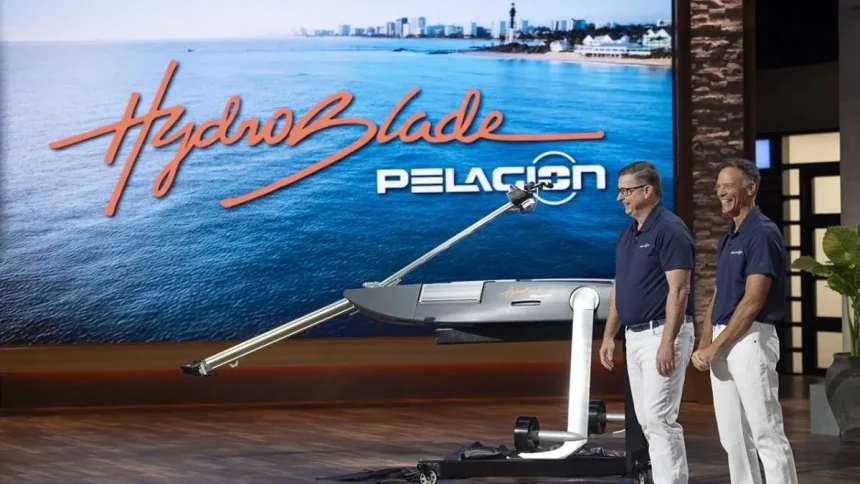
In the first episode of the new season itself, we saw some apprehension in the Sharks with respect to a high-tech jet ski from Pelagion. The hesitation with Pelagion stemmed largely from the product’s luxury positioning and steep price tag.
The Hydroblade, a sleek electric water-bike, offered quiet operation, stability, and a four-hour ride time. But retailing at $25,000 with a $12,500 production cost immediately limited its market to wealthy buyers. Tensions in the Tank didn’t help.
Founder Jamie clashed with Kevin O’Leary, whose tough questioning is a hallmark of the show, which the Sharks saw as rude and unprofessional. But the exchange came off as confrontational, and the Sharks were put off. Combined with the high valuation and the luxury-focused appeal, the founders’ attitude made it an easy pass, and no deal was made.
This example is indicative of the fact that in the current geopolitical and socio-economic landscape, a product that sells for double the production price to a very saturated market of the very rich elites is not going to float anyone’s boat (pun intended).
Insights from Daymond John and Kevin O’Leary
Daymond John had earlier commented on the situation. He said rising tariffs can increase costs, but don’t necessarily have to sink a business. Using technology effectively can give companies a crucial edge when the market is unpredictable.
Ongoing trade tensions create uncertainty. Companies that stay flexible and resilient have the chance to turn challenges into growth opportunities. The difference between thriving and failing often comes down to how well a business can adapt and keep moving forward.
Big corporations have been able to work around tariffs or exploit loopholes. Small and mid-sized businesses bear the full burden of struggling to keep their operations afloat.
Meanwhile, Kevin believes that tariffs won’t affect American consumers as severely as many fear. In countries like France, Italy, and Canada, shoppers already pay an additional 13 to 15 percent in consumption taxes on most goods. The U.S. doesn’t have a similar system. Yet, the American exports are subject to these taxes when they enter those markets.
He elucidated on the matter by saying, “So you see, the E.U. deal that just got penned, the headline number was 15%. It’s just a reciprocal tax on European goods being sold here. It’s slightly inflationary but reciprocal and is not like one side is taxing the other more. That’s why the market is taking it in stride.”
Sharks’ Caution in Uncertain Times
As Shark Tank enters this unpredictable economic climate, it’s clear that both entrepreneurs and investors are in uncharted waters. The Sharks remain cautious, especially when products cater to a narrow, luxury audience. Bold ideas need to be grounded in realistic market potential.