
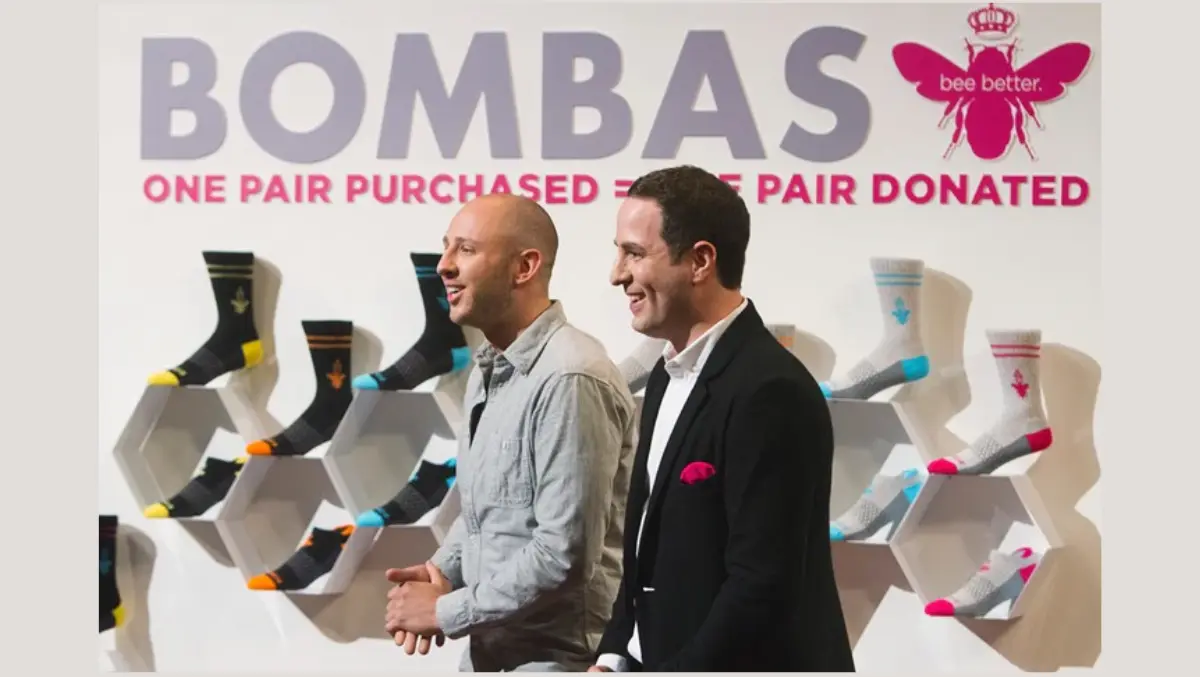
Back in 2014, two entrepreneurs, Randy Goldberg and David Heath, stepped into the Shark Tank studio with a simple product and a big mission.
They spent nearly ninety minutes under sharp questioning from the investor panel. The duo answered everything they could about pricing, growth, and what made their socks different.
Eventually, Daymond John agreed to invest $200,000 in exchange for a 17.5% share of the company.
It was the best-case scenario since John was the partner they had quietly hoped to work with from the very beginning. His background in building a major clothing brand from the ground up and his New York roots made the partnership feel like the right match.
Goldberg described the incident saying, “We knew that even though the mechanics of our business would be different, the nature and the heart of what it takes to build something from an idea from your home and turn it into something that is recognized all over the country [would be the same].
He added that “[We needed] somebody like that in our corner, validating and challenging us. That’s why we wanted Daymond as a Shark. And it’s been a fruitful and amazing relationship.”
The Website Crash That Cost Bombas $150,000
Just when the brand was going to ride the wave of Shark Tank exposure, their website crashed. They went from 500 orders per day to 4000 requests, and their website could not sustain that.
The crash cost them sales worth approximately $150,000, according to the founders’ interview. It cost them thousands to get the website back up, making matters worse.
The crash pushed them to rethink their entire tech stack, which led to one of their most important operational decisions.
The first thing they did was migrate their sales to Shopify.
The whole fiasco was a lesson in calculating the platform cost. If the hosting, maintenance, developer fees, and lost sales from downtime are over 3% of your revenue, it is time to jump ship.
How Bombas Built a 30% Revenue Engine Through Email
When Bombas realized email accounted for 15% of revenue, they doubled down on email-led customer engagements. This led them to pivot on email-based conversions. Randy Goldberg and David Heath adopted a multi-email strategy.
The first email was about the company and its mission. The second focused on what makes their company and socks different. The third was all about customer satisfaction reviews. They offered a discount only on their third email, and by then, they had already tapped into their market.
The takeaway from the incident was that a company should not offer an email discount right away. Instead, they should focus on connecting with the customer before going into the discount phase.
Email contributes roughly 30% of revenue, which is about $90 million annually, based on recent figures shared by the founders.
Bombas’ Ad Strategy That Cut CAC by 40%
The company then stopped wasting time tapping into hyper-specific markets. They broadened their focus to the age bracket of 18 to 65. Instead of focusing on a target audience-based advertisements, they relied on an already thriving Meta’s algorithm to boost their reach.
Scripted ads were replaced by real customers wearing the product. The customers were everyday wearers of the sock, ranging from a teacher to a nurse.
This strategy further boosted the sales. The customer acquisition cost dropped by 40%, and return on ad spend went from 2.8x to 5.2x.
The Referral Program Behind Bombas’ Viral Growth
Bombas worked on building a stellar customer service body. The company also made sure that the customer care representatives wore the product. On top of that, they were allotted a $1,000 budget for every customer care rep to solve problems creatively.
The care for customers gave them free marketing, which further solidified their image in the public eye.
Purpose Driven Referral Plan
The company beat the generic referral reward programs by introducing a new and more engaging referral program.
Their strategy offered 25% off for the friend, $20 in credit to the person giving the referral. To top things off, a successful referral triggered a donation. One purchased pair gave way to one pair donated to those in need.
The plan was very successful, and 17% of all customers started coming from referrals. The added social benefit to the community factor gave Bombas an undeniable appeal among the masses.
Revenue Timeline and Growth Milestones
All these strategic shifts had a compounding effect on Bombas’ revenue.
Here is a yearly revenue breakdown since these programs and policies were incorporated. For context, they made $300k in their first year. This was followed by $700k in their second year.
After their Shark Tank appearance, they made $4.7 million. In their fifth year, they made $50 million.
By year 10, they were making approximately $300 million per year. As of 2025, at the time of writing, they have made upwards of $1.3 billion in lifetime sales. The cherry on top is that they have actually donated over 100 million items.
Takeaway for Brands Aiming to Scale with Purpose
Bombas’ journey shows what happens when a company learns fast and treats every setback like a step forward.
From tech failures to marketing wins, Bombas kept moving with purpose. A strong product helped, but a stronger understanding of people is what turned them into a brand worth talking about.