
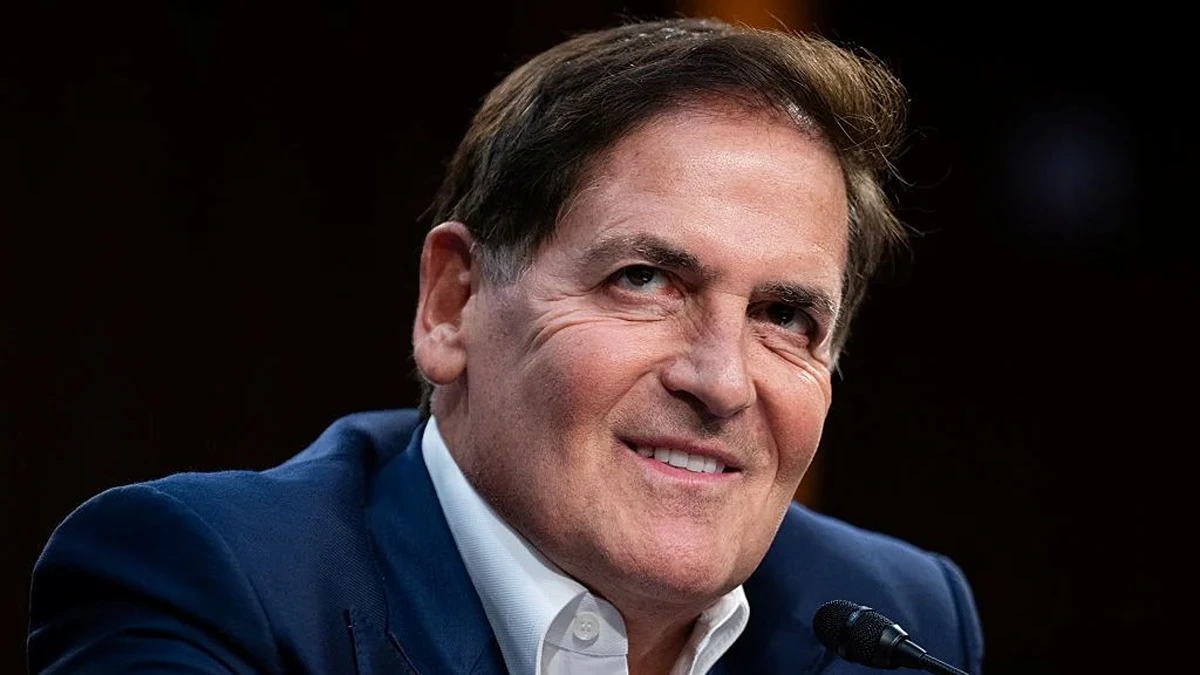
Mark Cuban, the billionaire entrepreneur, investor, and Shark Tank personality, recently found himself at the centre of attention after his warning about meme coins.
Undoubtedly, few voices like Cuban’s carry weight in this unpredictable cryptocurrency world. His recent warning makes more sense now because the meme coin market has lost 60% of its value.
Cuban’s Candid Take on Memecoins
Though Mark Cuban has been a great supporter of prominent memecoins like Dogecoin, in December 2024, he spoke about the risks involved in the memecoin segment. Mark was encouraging the Dallas Mavericks to add a new method of payment by accepting DOGE.
However, he spoke frankly about the broader market of memecoin-inspired cryptocurrencies by stretching a line.
The billionaire investor believes that holding and trading memecoins is more like a gamble, as people buy in the hope of selling them for more money later, despite the fact that these tokens have no inherent value.
Cuban liked the metaphor “game of musical chairs”, which was meant to capture the unsustainable dynamics of this asset market.
He bluntly stated that without an active community like the one for Dogecoin, most new memecoins are unable to develop anything substantial. Instead, they depend on hope, sentiment, and hype.
When Warning Meets Market Reality
After his 2024 warning on a podcast, nearly a year later, many of the sector’s biggest memecoins have not shown any growth. Instead, prominent meme coins like Dogecoin, Shiba Inu, and Pepe have shown a steep decline.
Reportedly, they have lost around 55% to 75% of their value in 2025. The total market capitalization of the memecoins segment has been reduced to more than half of its previous level, ultimately plunging by more than 60%.
This drop in value has prompted analysts and everyday traders to look upon the Cuban’s viewpoint. In essence, it means it is a high-risk, volatile game where the music can stop at any time. At this time, when prices are dropping sharply and further eroding the market cap, his warning seems true to most experts.
Why Did Cuban’s Warning Resonate?
Mark Cuban’s warning resonates for many reasons. Let’s list some of those.
Framing Risk in Plain Terms
He intentionally described the memecoin market as musical chairs to convey a complex financial concept in a way that was meaningful and accessible. Hence, when investors are unable to secure a seat due to market volatility, they understand the risks of speculative investing, leaving latecomers exposed.
Highlighting Lack of Fundamentals
The memecoin tokens depend on market hype cycles, which is a shaky foundation given the absence of intrinsic value, innovation, and the coin’s underlying utility. So, Cuban’s main criticism was focused on the lack of real utility.
Greater Fool Theory in Action
There is an economic theory referred to as the Greater Fool Theory. Likewise, Mark’s comments resemble those of buyers of financial assets that lack any real value and expect to sell them for a higher price. This act can feel exciting until buyers run out, at which point the market pulls the price upwards.
Does Community Still Matter?
Mark explicitly states that his warning concerns memecoin projects that lack sustainable backing. Thus, for established tokens like DOGE and others with a wide user base, the social push can give them staying power, regardless of the high risk involved.
In the absence of underlying utility and value, even the memecoins backed by a strong community will not have much to defend their prices. For most memecoins, the narrative falls as the asset’s novelty fades.
Market Impact and Investor Reflection
Furthermore, when financial markets change wildly, losses are not limited to dollar amounts. Instead, this also shows the psychological and emotional toll on investors who bought the currency at its peak. This recent downturn in the memecoin market has started wider conversations about portfolio and risk tolerance.
For that reason, some prominent industry experts argue that the memecoin downturn could transform into industry consolidation. In this, only a few well-supported coins survive the race, while the smaller tokens fade into obscurity.
Lessons for the Retail Investor
Here are a few important takeaways from the warning given by Mark and other everyday investors.
- Beware of Speculation and Hype: Social media and community buzz can drive coin prices higher. Nevertheless, this phenomenon can reverse just as quickly when the market sentiment shifts.
- Understand Your Risk Tolerance: If, as Mark mentioned, memecoins are like musical chairs, be ready for sharp price drops. Decide how much you are prepared to lose without disrupting your future financial goals.
- Focus on Fundamentals: Memecoin projects that have strong utility, strong development teams, and absolute value are better suited for downturns. Instead of those that are purely driven by meme culture.
- Diversify Thoughtfully: As a famous saying suggests, we should diversify the risks. This also holds true for assets like memecoins, including utility tokens, stablecoins, and others, further helping in mitigating the downturns.
Looking Ahead: Is the Memecoin Craze Over?
The recent decline in the memecoin segment suggests a temporary market correction or a structural shift.
Many experts and investors view these cycles as natural, rising with excitement and falling with weariness. At the same time, many other traders view this as a wake-up call for the industry to move beyond just speculative currencies.