
Due to the rise of e-commerce, package theft has become a frustrating and costly side effect of how consumers shop. Porch piracy has become a widespread problem that affects owners, businesses, and renters equally because of the delivery of millions of parcels at the doorstep.
In the presence of video doorbells and security cameras, recording thefts has become common. However, there is a requirement to prevent those thefts.
This ballooning market gap between security and convenience is where the idea of BoxLock came from, as we have seen in Shark Tank Season 10 Episode 1.
BoxLock’s aim is to prevent theft before it can happen, rather than just documenting the stolen package deliveries. By merging the smart lock technology with the package verification process, the company transformed carrier deliveries.
Below is an in-depth analysis of how BoxLock approached this market gap, making this solution unique. Also, what happened to the business after its appearance on Shark Tank?
The Growing Crisis of Package Theft
Online purchasing of items has become embedded in the daily lifestyle of people today. Everything, including electronics, luxury shopping, groceries, and even medicines, is now delivered to the doorstep routinely, though this convenience comes with a price.
Porch piracy has become a serious problem due to the fact that most of the packages are left unattended for hours in the United States.
Mmany deliveries happen during working hours when people are not at home. Especially, apartments and urban neighborhoods are the most vulnerable because stolen goods go unrecovered with no accountability.
Though retailers often replace the packages, the delays, inconvenience, and emotional frustration erode the trust of consumers in e-commerce and delivery systems, which further forces people to change their purchasing behavior.
As mentioned before, traditional methods like doorbells and cameras offer evidence and not protection. Hence, consumers needed preventive measures, and not just reactive ones, as BoxLock recognized.
BoxLock’s Core Idea: Prevention Over Observation
The central idea of BoxLock was built on the premise that if goods are secured immediately after delivery, theft will become almost inevitable.
Consequently, rather than depending on neighbor vigilance or motion detection, BoxLock invented a smart padlock. It was designed to keep the packages safe inside a container.
The BoxLock system works by integrating both software and hardware to develop end-to-end security. A smart lock is connected or attached to the delivery package box, which further scans the barcode tracking on any incoming deliveries.
Shipping carriers like FedEx, UPS, and USPS will verify the delivery, and once it is verified, the lock opens automatically. If any unauthorised person tries to access the package, real-time alerts will be sent to the owner’s mobile phone. Instead of a vulnerable and non-preventive delivery, this product turns it into a controlled transaction.
What Made BoxLock Different From Other Smart Home Devices?
Though the smart security market space is already crowded, BoxLock differentiates itself from it in several ways.
Key Differentiators
- Due to the carrier-level verification process, BoxLock ensures legitimate deliveries at your doorstep, unlike any other generic alternative.
- Furthermore, this ensures immediate prevention as it physically prevents theft, instead of just recording it as evidence.
- BoxLock does not rely on a single carrier or retailer. The company works with multiple carriers to expand its prevention approach and reach more people.
- Also, the product has a standalone functionality that works independently without depending on home entry systems or door locks.
One of the signature commitments they made was to promise that theft would not happen in the first place, besides video surveillance systems that promise evidence of who stole your package.
Shark Tank: BoxLock’s Pitch and Response
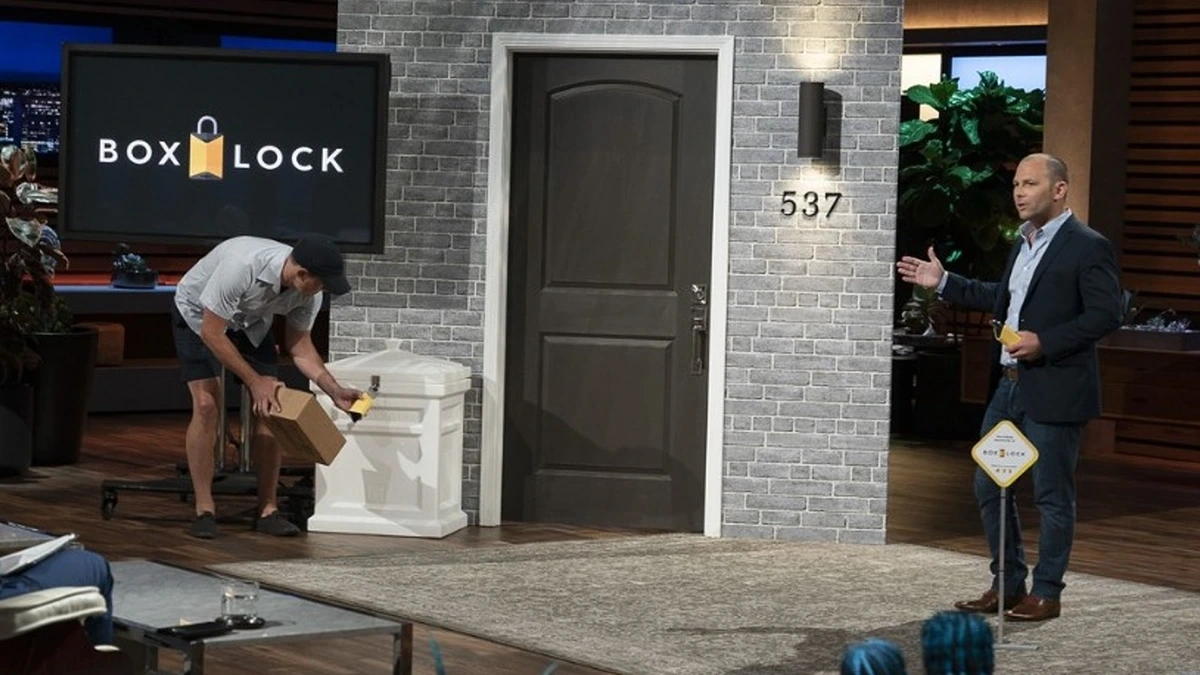
BoxLock entered Shark Tank Season 10 Episode 1, and Brad Ruffkess pitched an app-enabled padlock system, wherein the delivery driver scans the barcode to verify the security lock. This solution was an answer to the problem of porch piracy. Also, the founder of BoxLock presented a working security lock to the Sharks.
He also stated that 30% of Americans experience this problem, as he came in seeking $1 million in exchange for a 5% equity stake in his company. Further, he shared his business model, which was focused on hardware sales figures and software services in the future.
The Sharks’ Reaction
Though the Sharks were perked up by the idea of blending hardware and software innovation, plus application. They were very skeptical about the valuation, including Kevin O’Leary, Daymond John, Jamie, and Mark Cuban.
The Sharks also suggested that they need to transform the consumer behavior, upfront hardware costs, and a crowded market space of home security solutions.
Lori Greiner was the only Shark who decided to offer them a deal. Thus, she offered a $1 million loan for 8% interest plus a royalty. Nevertheless, Brad countered her offer, and she was not satisfied with the counteroffer, so she chose to bow out.
Hence, they could not secure a deal and had to leave Tank empty-handed. Despite that, BoxLock gained visibility and validation when the episode aired on national television, which further helped push the product.
Post-Shark Tank Progress: Where BoxLock Went Next
After their appearance on Shark Tank, the product was made available on Amazon exclusively. Moreover, 10 months later, they announced that they had secured deals with Ace Hardware in more than 5000 brick and mortar retail places, and Home Depot.
Surprisingly, they partnered with over 500,000 delivery drivers, and their deliveries were completed in under 20 seconds. Even 19 months after the release, they transformed their business model to B2B by partnering with the largest digital supply chain services company, SDI.
In the year 2021, they created locks specifically for the use of enterprises, and six months after that, BoxLock partnered with McShane Wedding and Parsyl. Thus, BoxLock emphasizes and integrates with routine management and lab information management systems.
However, as of 2025, the BoxLock is not available on Amazon. Though they have future plans of expanding their services to construction sites.
Takeaway
BoxLock represents a new way of thinking about delivery security, one that prioritizes prevention, verification, and control. While the Sharks passed on the deal, the startup succeeded in reframing package theft as a solvable problem.