Beer Girl Shark Tank Update – Shark Tank Season 17
A lighter beer and a bold pitch took the spotlight in Shark Tank Season 17. Can a beer made for women stand out in a busy market?

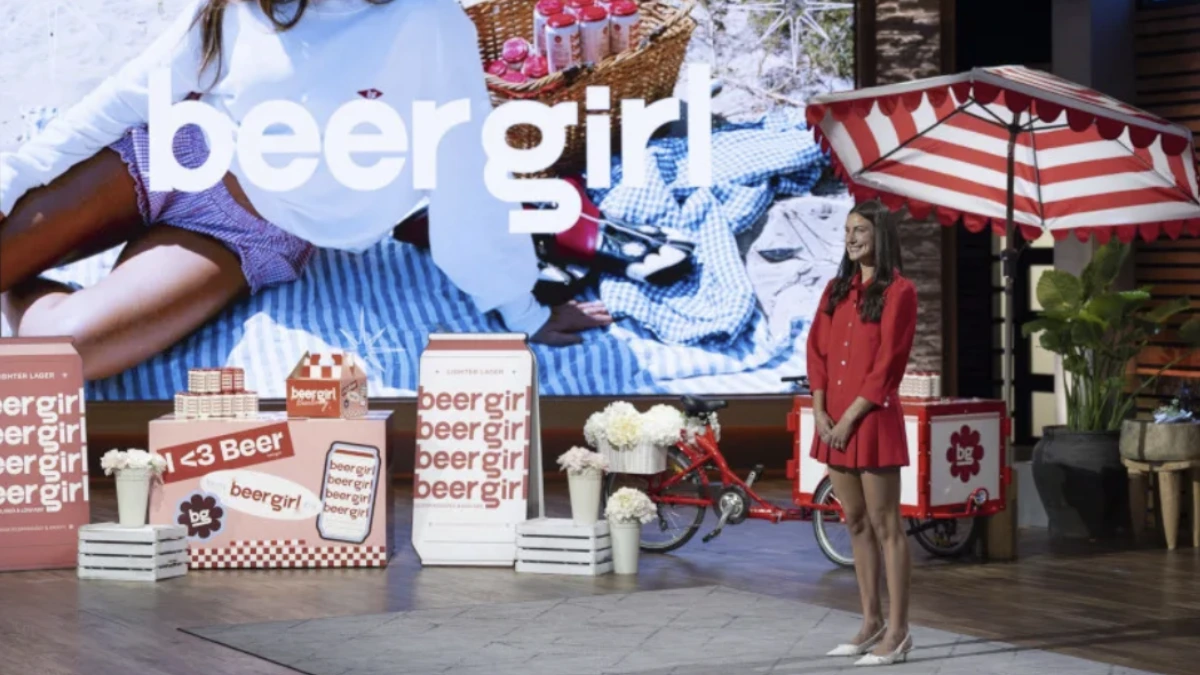
For a time, men have been marketing beer, and it seems they have only had men in mind. This meant women were not really considered when it came to beer. On Shark Tank Season 17, Episode 14, Caroline, who started Beer Girl in Laguna Beach, California, saw something at her family’s brewery.
She noticed women looking at the beer choices. Then, deciding to get a cider or seltzer instead. She presented a kind of beer made for women.
Caroline asked the sharks for a $125,000 investment in exchange for 10% of her company, Beer Girl. Would the Sharks like her idea and challenge the norms of a male-dominated industry?
About Beer Girl
| Category | Details |
| Business Name | Beer Girl |
| Founder | Caroline (Laguna Beach, CA) |
| Industry | Health Beverage |
| Product | Corn-based, low-alcohol Mexican-style lager |
| Funding (Pre-Shark Tank) | Self-funded |
| Investment Asked | $125,000 for 10% equity |
| Deal Status | Deal secured with Fawn Weaver |
| Deal Outcome | $125,000 for 20% equity |
| Valuation | $625,000 |
Caroline has a background in music. She used to tour and open for R&B artists. During the pandemic, she started working at her family’s brewery, Wagon Wheel Brewing Company. She saw that women coming to the brewery were not drinking the beer because it was too heavy for them.
Caroline wanted to do something about this. She worked with the head brewer to create Beer Girl.
Beer Girl is a Mexican-style lager that’s perfect for women who like beer and people who care about what they eat. It is made with corn, not wheat, unlike the rest of the beers on the market. It has less gluten and no sugar, making it easier to drink.
Each six-pack of Beer Girl costs $4.60 to make, and stores buy it for $8.40. They sell it to people for $11.99.
Beer Girl Shark Tank Pitch
Caroline entered the Tank with confidence, holding a six-pack of her lager, and said, “Most beer has been made by men for men for decades. Women were part of the scenery while I ran my family brewery, but they weren’t the audience. Beer Girl changes that.”
She invited the sharks to taste the lager. Robert Herjavec immediately complimented the flavor, saying, “It’s really good,” while Lori Greiner asked if it was low alcohol, and Caroline confirmed it was 3.5%, explaining that the corn base makes it easier to digest than wheat.
Kevin O’Leary questioned her brewing process, and Caroline explained her family’s Wagon Wheel Brewing Company in California and how contract brewing expanded capacity.
The pitch included sales figures of $140,000 in the first year and currently $140,000–160,000 annually, with ongoing distributor talks. Caroline projected $1.1 million in revenue next year after opening 150 new retail doors and potentially 330 more.
She emphasized grassroots marketing with in-store demos and events rather than social media, coining the term “liquid to lips” for her hands-on approach.
Fawn highlighted the crowded beer market and the importance of storytelling. Caroline responded that the gluten-reduced, low-sugar, corn-based formula was designed to meet an underserved need.
What Makes Beer Girl Unique?
Beer Girl stands out in a crowded beer market through a mix of product and positioning:
- Designed specifically for women and overlooked consumers.
- Gluten-reduced, low sugar, low alcohol, and easier to digest.
- Direct, hands-on promotion through demos and distributor connections.
Did Beer Girl Get a Deal on Shark Tank?
Robert Herjavec praised the story and strategy but believed it wasn’t for him.
Daniel Lubetzky and Kevin O’Leary opted out due to gaps in their beverage expertise.
Lori Greiner expressed interest but deferred to Fawn Weaver’s strategic advantage.
Fawn Weaver made an offer of $125,000 for a 20% share. Caroline asked for help with financing purchase orders. She suggested Fawn invest $125,000 and also provide a $500,000 line of credit. Fawn thought Caroline could manage paying for these costs herself.
Then, they talked about how Caroline would get everything done. Caroline’s husband was helping her make all the deliveries.
Caroline agreed with Fawn Weaver’s offer. The Sharks were happy and thought the company could do really well because she worked very hard, and Fawn Weaver’s investment was a good idea for Caroline and for Fawn Weaver.
Beer Girl Shark Tank Update
After Beer Girl appeared on the show, many more people became interested. This helped to get more distributors.
Caroline kept giving out samples in stores and also used the fact that Beer Girl was on Shark Tank to get big stores to sell them.
It started selling well and attracted people who care about what they eat and drink.
Where Can You Buy It?
Beer Girl is now available in California stores. You can also get it from distributors and try it at in-store demos.
It will probably be sold across the country. Beer Girl even lets you buy it online from its official website. You can find out more on Instagram and Facebook.
Quick Summary
- Caroline pitched Beer Girl, a low-alcohol, gluten-reduced lager for women.
- Fawn Weaver invested $125,000 for 20% equity
- The beer’s health-conscious formula, marketing, and story differentiate it in a crowded beer market.
Curious about the other businesses featured in Shark Tank Season 17 Episode 14? Explore more updates and see which ideas made a splash in the Tank.
- REMplenish Shark Tank
- GOB Shark Tank
- Never Have I Ever Shark Tank