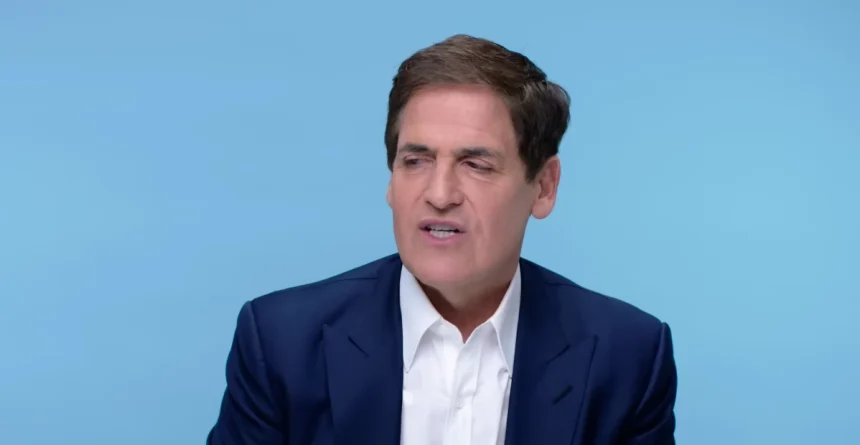
Mark Cuban might have been the richest person sitting in the Shark Tank chairs, but his story didn’t start with money or privilege.
Before he was worth billions, he was sharing a small three-bedroom apartment with five roommates. He’d even hit the grocery store late at night just to save a few bucks. These habits were an attempt at figuring out how to stretch every dollar.
Cuban’s hustle started long before his tech fortune. As a kid, he was already finding ways to make money. At that time, it was by selling stamps and coins to anyone who would buy.
That same drive carried him through the creation of Broadcast.com, which Yahoo later bought for $5.7 billion in 1999.
Over the years, he’s learned a lot about what it really takes to build lasting wealth. And one of his core beliefs completely goes against what many modern startups chase today.
Mark Cuban on Why Startups Fail
As someone who has been in the game long enough, Mark Cuban knows a thing or two about startups. Here is what he had to say.
1. Bootstrapping Over Fundraising
A lot of new business owners chase investors right away, but Mark Cuban doesn’t see that as the best move. He believes funding shouldn’t be your main focus when you’re just getting started.
At a Clover x Shark Tank summit, he said, “So many people get caught up in raising money, but you need customers. If you get customers, you can grow your business and own your business. We focus too much on the Silicon Valley ethos, and people think they need to raise money first.”
Cuban suggests building your business with your own money first. He believes raising funds too early can hurt more than help. In his words, “The longer you work to build your business, the further you get before raising money, if at all, the richer you are going to be. That is a big part of the game.”
He further added on his point, saying, “You want that dream to come true, and the longer you can hold out before raising money, the richer you will be. If you find yourself in a position where you don’t have to raise money at all, you can send me a check.”
2. The Power of Listening to Your Customers
Along with pushing for bootstrapping, Cuban says business owners need to truly understand their customers. Knowing who you’re selling to is just as important as the product itself.
He emphasized the importance of knowing your customers a lot. “You need to talk with your customers more. You need to learn what their experiences are. It’s hard to communicate a lot of times with your customers because we’re all afraid of getting a ‘no.’ You have to talk to them and be brutally honest.”
Money is tight for many people right now, and that makes spending habits harder to predict. This is why it’s crucial for business owners to understand what customers still see as worth paying for, even when they’re trying to save.
Mark elucidated on this very important point by saying, “It’s harder to know now who’s struggling, and that makes it more important than ever that as a founder you communicate more. It can be email, it can be in-person, but you have to communicate. If you don’t know what’s in the heart, mind, soul, budget and bank account of your customers, how will you know how to price your goods and services? That’s the challenge.”
3. Believe in What You’re Selling
Cuban believes every entrepreneur needs to love selling what they offer. If you’re not excited to share your product or service, you might be in the wrong business. He says founders should feel like they’re helping their customers by introducing them to what they’ve built. If you don’t see it that way, it may be time to rethink your approach.
His approach essentially means to love the product you sell; sell the product you love.
Mark Cuban’s Journey From Startup Founder to Billionaire Investor
Mark Cuban’s rise to success happened one step at a time. He sold his first company at age 32 for $6 million, marking his first major milestone. Next came Broadcast.com, which he co-founded and later sold to Yahoo for more than $5 billion in stock. That deal made him a major name in business.
By the 2010s, he had become a familiar face on Shark Tank. Cuban joined as a guest in 2011 and became a full-time Shark the following year. He spent more than ten years investing in and advising new entrepreneurs on the show.
These days, Cuban is focused on his healthcare company, the Mark Cuban Cost Plus Drug Company. It’s built to make prescription drugs more affordable. He also remains a co-owner of the Dallas Mavericks.
Lessons Entrepreneurs Can Learn From Mark Cuban
Mark Cuban’s story is proof that success doesn’t come from luck or connections. It comes from patience, hard work, and a willingness to keep learning. He built his career by staying scrappy, trusting his instincts, and putting customers before investors.
His advice is simple. Know your product, understand your audience, and believe in what you’re selling. That mindset turned a broke college grad into a billionaire entrepreneur, and it’s a lesson that still holds true for anyone chasing their own version of success.