How does the same MRI machine become worth $2,500 in one building and $350 in another?
It’s a question that cuts straight through the complexity of American health care, stripping away industry jargon and reimbursement formulas to reveal something most patients already suspect: health care pricing often makes little sense.
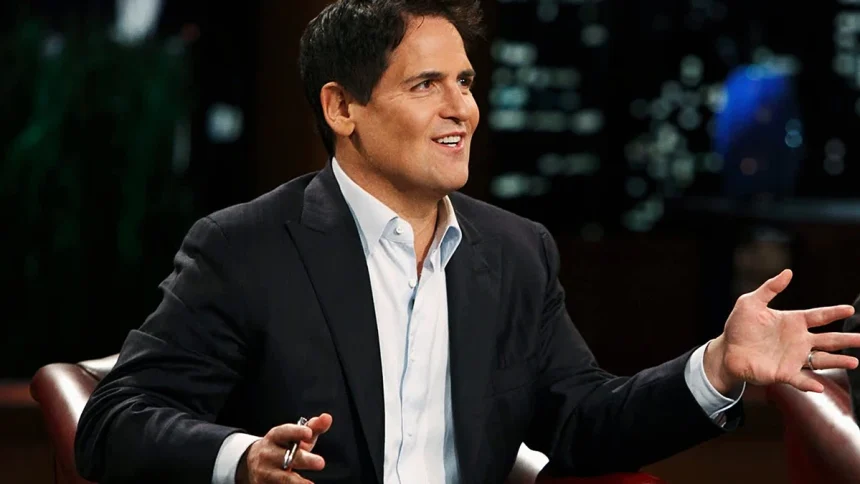
That question came from billionaire entrepreneur Mark Cuban during a discussion on X in January, and it quickly ignited a broader debate about who is really responsible for soaring medical costs in the United States.
At the center of the conversation wasn’t a groundbreaking medical procedure or a new pharmaceutical treatment. It was an MRI scan, a routine diagnostic tool used millions of times every year.
And according to Cuban, the enormous gap in pricing reveals something much bigger than the cost of a single test.
The Question That Sparked the Debate
The discussion began when a physician argued that insurance companies are often blamed unfairly for rising health care costs.
The physician pointed out that drug spending accounts for only a fraction of overall health care expenses and suggested that providers, not insurers, deserve more scrutiny because they determine the prices attached to medical services. Cuban’s response was direct.
“Explain to me why the insurance company will pay $2500 for an MRI when there is a center down the street that will do it for $350?”
It was a simple question, but one that exposed a complicated reality. Why should two patients receive nearly identical scans using similar equipment and walk away with bills that differ by thousands of dollars?
The answers, as many health care professionals and patients pointed out, are buried deep inside a system few people fully understand.
Want another reason why healthcare costs are insane ?
Hospitals will not only charge a facility fee and other random costs BUT ALSO , if they believe the insurance company is willing to pay MORE THAN WHAT WAS ON THE PATIENT BILL, THEY WILL INCREASE THE BILL to the insurance…
— Mark Cuban (@mcuban) January 14, 2026
Why MRI Prices Vary So Widely
The difference between a $350 MRI and a $2,500 MRI often has little to do with the machine itself.
Instead, pricing is shaped by layers of administrative structures, contracts, and negotiations that exist behind the scenes.
Why Hospital MRI Pricing Looks So Different
One explanation frequently cited in the discussion was the hospital chargemaster.
A chargemaster is essentially a hospital’s internal pricing catalog, assigning prices to procedures, supplies, and services. Critics have long argued that many of these prices bear little resemblance to the actual cost of delivering care.
As a result, an MRI that costs a few hundred dollars to perform may be listed at several thousand dollars before insurance adjustments are applied.
For patients, those numbers can appear arbitrary. For hospitals, they are often part of a much larger financial strategy.
How Facility Fees Increase MRI Costs
Hospital-based imaging centers typically attach additional facility fees to procedures.
These charges help cover staffing, building maintenance, technology upgrades, administrative operations, and other overhead costs associated with running a large health system.
Independent imaging centers operate differently.
Without the burden of managing emergency departments, inpatient facilities, and sprawling administrative networks, many can offer transparent cash pricing directly to consumers. That leaner structure often allows them to charge hundreds rather than thousands of dollars for the same scan.
When Negotiating Power Shapes Prices
Pricing in health care is rarely determined by cost alone.
Large hospital systems often possess significant negotiating leverage because insurers need them within their networks. Employers expect access to major hospitals, and insurance plans risk becoming unattractive if those providers are excluded.
That dynamic can give dominant hospital networks the ability to negotiate higher reimbursement rates.
Some industry observers argue that these negotiations create an environment where elevated prices become normalized rather than challenged.
In that sense, the final cost of an MRI may depend less on medical necessity and more on the balance of power between hospitals and insurers.
Shifting Costs Across the System
Another explanation raised during the discussion involves cost shifting.
Hospitals frequently receive lower reimbursement rates from Medicare and Medicaid than they would prefer. They also provide care to uninsured patients who may never fully pay their bills.
To compensate, some hospitals charge private insurers significantly more for profitable services like imaging scans, outpatient procedures, and specialty care.
Supporters argue that this helps keep hospitals financially viable. Critics counter that it contributes to an increasingly unsustainable cycle of rising costs.
Patients Know the Difference
What made the discussion particularly striking was the flood of personal stories that followed. Patients described receiving MRI bills ranging from roughly $2,400 to more than $9,000 through hospital systems and insurance plans.
Others shared experiences finding independent imaging centers offering similar scans for cash prices between $275 and $700.
The stories highlighted a growing frustration among consumers who often discover dramatic price differences only after receiving a bill. For many Americans, shopping for health care remains far more difficult than shopping for nearly any other service.
The prices are rarely transparent, comparisons are difficult, and patients often have little idea what they will owe until long after the procedure is completed.
Cuban’s Bigger Criticism of Health Care
For Cuban, the MRI debate is part of a much larger argument.
He has spent years criticizing what he sees as excessive complexity and opacity within the health care industry. Through Cost Plus Drugs, his effort to increase transparency in pharmaceutical pricing, he has repeatedly challenged systems that allow costs to rise without clear justification.
His position is not that insurers alone are responsible.
Rather, he argues that insurers and providers both participate in a framework that rewards higher prices. If hospitals charge more and insurers continue reimbursing those charges, the cycle continues.
As Cuban suggested during the discussion, the system is not necessarily required to operate this way. It simply has evolved in a manner that permits it.
Why Investors Are Paying Attention
The MRI pricing controversy reflects a broader trend unfolding across health care.
Investors have poured billions of dollars into startups focused on transparent pricing, digital health services, artificial intelligence, direct-to-consumer care, and streamlined billing systems.
The opportunity is obvious. Health care remains one of the largest industries in the United States, yet it is also one of the most fragmented and administratively complex.
Entrepreneurs see an industry filled with inefficiencies. Investors see a market ripe for disruption.
The growing demand for price transparency has become one of the strongest forces driving innovation in the sector.
Companies promising simpler billing, clearer costs, and more affordable care continue attracting attention from both consumers and capital markets.
The MRI Is Just the Symbol
Ultimately, Cuban’s question was never only about MRI scans.
The machine itself hasn’t changed. The technology is largely the same. The diagnostic purpose remains identical. What changes is the maze surrounding it, contracts, negotiations, pricing schedules, facility fees, and institutional incentives.
That complexity creates a reality where two patients can undergo nearly identical procedures and face dramatically different costs.
The MRI has become a symbol of a larger problem. In American health care, the price of care often depends less on what is being delivered and more on where it is delivered, who is paying, and how the system behind the scenes is structured.
For Cuban, that is the real scandal, not the machine, but the pricing game built around it.