Hungry Harvest Shark Tank Update – Shark Tank Season 7
See how Evan Lutz landed a Shark Tank deal and grew Hungry Harvest into one of the leading ugly produce delivery services in the U.S.

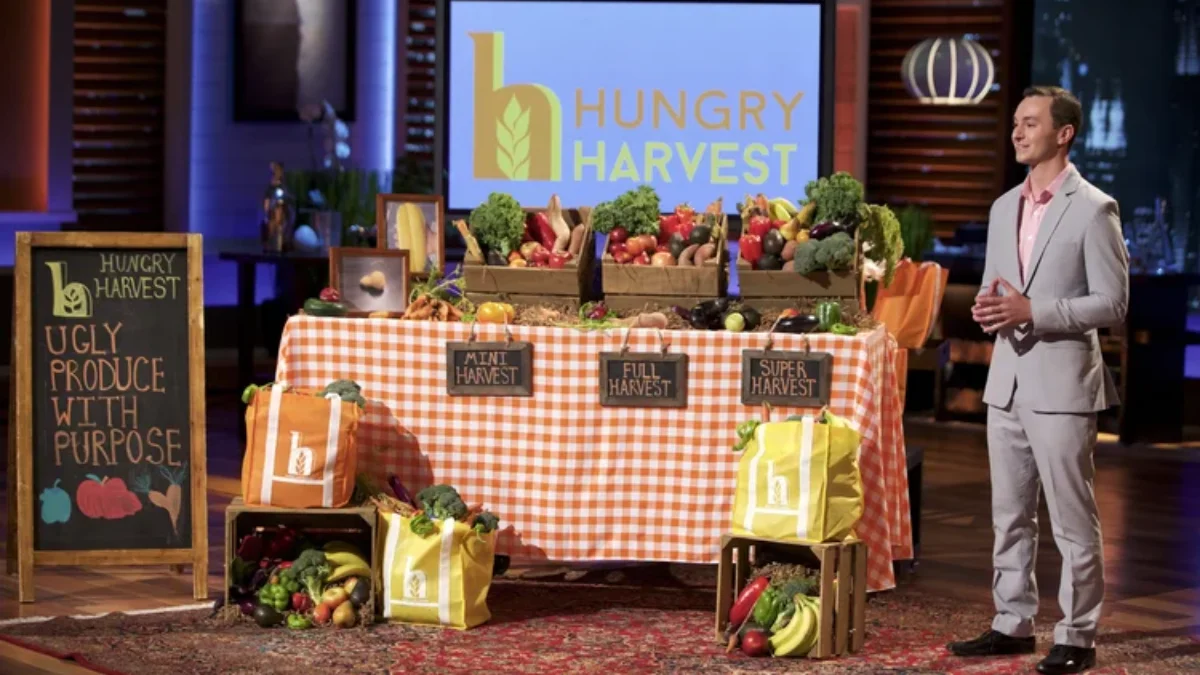
Evan Lutz hoped the Sharks would find Hungry Harvest, his “ugly produce” subscription business, an appetizing investment opportunity on Shark Tank, Season 7, Episode 13.
Lutz brought a concept that had been gaining popularity in France for several years to the on-demand subscription delivery space. Hungry Harvest sourced produce from wholesalers that never made it to retail stores and sold it at a discount, all with free delivery.
Evan Lutz had grown up in Baltimore, where he saw too much poverty and was shocked by the amount of food waste. He made it his mission to help consumers eat healthy while helping their communities at the same time.
Lutz wanted a Shark to help him expand the company’s geographic reach. Would one of the Sharks bite?
About Hungry Harvest
| Category | Details |
|---|---|
| Business Name | Hungry Harvest |
| Founder | Evan Lutz |
| Industry | Food & Agriculture |
| Product | Subscription service for ugly and imperfect produce |
| Funding (Pre-Shark Tank) | $100,000 in venture capital |
| Investment Asked | $50,000 for 5% equity |
| Deal Status | Deal secured with Robert Herjavec |
| Deal Outcome | $100,000 for 10% equity |
| Valuation | $1 million (at the time of the Shark Tank pitch) |
Ugly produce includes misshapen potatoes, lopsided apples, awkward heads of lettuce, and bumpy carrots that taste the same as conventional produce but are discarded because consumers prefer better-looking fruits and vegetables.
Billions of pounds of perfectly edible fruits and vegetables are discarded each year simply because they do not meet retail appearance standards.
Lutz purchased this surplus produce and sold it to consumers, who typically saved 10%-20% compared to regular produce. For every bag delivered to paying customers, Hungry Harvest also donated 1.2 pounds of produce to food banks and free farmers’ markets in the greater Washington, D.C. and Baltimore areas.
The company delivered rescued fruits and vegetables weekly in reusable bags. Customers paid $15–$25 per week depending on the size of the harvest bag, with options including fruit-only deliveries and organic vegetables.
Hungry Harvest Shark Tank Pitch
Evan entered the Tank seeking $50,000 in exchange for 5% of Hungry Harvest.
He opened his pitch by telling the story of shiny apples and asked how they all grew so perfectly. He explained that only “pretty” produce reached grocery stores, while the ugly produce ended up in landfills.
Evan explained that Hungry Harvest purchased surplus produce from local farms and also sent food to hungry families, creating what he described as a win-win-win situation.
He handed out samples of ugly carrots and explained the company’s three produce bag sizes. He told the Sharks that Hungry Harvest produce was just as fresh as its conventional counterparts but simply looked different.
The business had recorded a net loss of $20,000. Sales reached $37,000 during the first six months and grew to $100,000 during the last four months with 500 active users.
Evan explained that the service saved customers time and money while distributing 5,000 pounds of produce in impoverished areas every month.
What Made Hungry Harvest Unique?
Hungry Harvest stood out through its combination of affordability and social impact:
- Rescues perfectly edible “ugly” produce that would otherwise be discarded.
- Saves customers 10%–20% compared to regular grocery produce.
- Donates 1.2 pounds of produce for every bag sold.
- Combines food waste reduction with affordable weekly home delivery.
Did Hungry Harvest Get a Deal on Shark Tank?
Barbara Corcoran said she preferred profits before philanthropy and referenced Grace and Lace opening orphanages after becoming profitable.
Kevin O’Leary compared Hungry Harvest to Plated and discussed possible logistics synergies.
Robert Herjavec offered $100,000 for 10% equity, explaining that he could help run, scale, and empower the business.
Evan asked if any other Sharks wanted to make an offer, prompting Mark Cuban to become frustrated.
Kevin began making an offer, but Robert interrupted and told Evan to either accept his offer or continue negotiating with Kevin and Lori Greiner.
Evan accepted Robert Herjavec’s offer of $100,000 for 10% equity.
Hungry Harvest Shark Tank Update
After appearing on Shark Tank, the deal with Robert Herjavec closed successfully.
Daily website visits increased from around 150 to more than 3,000 after the original broadcast, helping the company rapidly grow its customer base.
In July 2019, Hungry Harvest acquired Durham, North Carolina-based Ungraded Produce, a company offering similar services.
During the COVID-19 pandemic, demand for grocery delivery increased significantly, helping accelerate Hungry Harvest’s growth.
In December 2020, Evan returned to Shark Tank for a five-year update, revealing that Hungry Harvest had delivered more than 2 million produce boxes and rescued over 15 million pounds of fruits and vegetables from going to waste.
The company had also generated more than $50 million in sales by that point.
Funding and Expansion
In September 2020, the company raised $13.7 million in Series A funding from Creadev, Danone Manifesto Ventures, Quadia, and Maywic Select Investments. This funding helped scale operations, improve sustainability efforts, expand product offerings, and strengthen its supply chain.
During the COVID-19 pandemic, Hungry Harvest launched an Emergency Food Box program that distributed more than 670,000 pounds of fresh produce to communities with limited access to healthy food.
The company expanded its service areas to Maryland, Washington, D.C., Virginia, Greater Philadelphia, Southern New Jersey, Northern Delaware, South Florida, the Triangle region of North Carolina, Charlotte, and the Detroit metro area.
By April 2023, the company had not expanded its delivery footprint further, but it had launched a wholesale division serving restaurants and food service operations.
New Products and Services
Over the years, Hungry Harvest expanded produce subscriptions by offering grocery delivery, including dairy products, eggs, pantry staples, beverages, proteins, and plant-based foods. Customers could also customize their produce boxes, and the company introduced its own branded products such as dips, cold brews, cookies, and cheese.
In 2021, Hungry Harvest also refreshed its branding with a new logo reflecting its mission of creating a better food system.
In October 2023, the company raised another $1.15 million toward a $5 million funding goal.
It also introduced Harvest RX, a service delivering food directly to Medicare patients.
Through Harvest RX, Hungry Harvest partnered with healthcare providers, hospitals, and insurers to expand into the growing “food as medicine” space, helping patients gain access to nutritious food through medically supported programs.
Where Is Hungry Harvest Now?
Hungry Harvest remains in business today and continues its mission of reducing food waste while fighting hunger through partnerships with food banks, schools, and community organizations across its service regions.
As of 2025, the company had rescued more than 40 million pounds of produce that would otherwise have gone to waste while continuing to donate healthy meals to people in need with every customer order.
Some reports estimate the company’s annual revenue exceeds $14 million as the business continues expanding its grocery offerings and subscription services.
Posts About Hungry Harvest on the Shark Tank Blog
Want to learn more about the concept behind Hungry Harvest? Check out our detailed guide on Ugly Produce to understand how imperfect fruits and vegetables help reduce food waste.
Where Can You Buy It?
Hungry Harvest became available through its weekly subscription delivery service across multiple regions in the United States.
Customers can order produce directly from the company’s website, with options including mixed produce, fruit-only boxes, and organic deliveries. Follow them on Instagram, Facebook and X for more updates.
Quick Summary
- Evan Lutz pitched Hungry Harvest, a subscription service that rescued ugly produce and reduced food waste. Robert Herjavec invested $100,000 for 10% equity.
- The company’s affordable pricing, product donations, and mission to reduce food waste have helped it stand out.
- After Shark Tank, Hungry Harvest expanded its operations, secured additional funding, launched Harvest RX, and continues serving customers through its subscription-based grocery delivery service.
Check Out Other Shark Tank Season 7 Episodes.
Curious about the other businesses featured in Shark Tank Season 7 Episode 13? Explore their updates and see what happened after their time in the Tank.