Food flops have become some of the most unforgettable moments in Shark Tank history. While some food brands secure investments and grow into successful businesses, others leave the Tank empty-handed despite their creative ideas.
From unusual beverages to innovative snacks, these food flops failed to convince the Sharks for a variety of reasons.
1. Cookie Kahuna
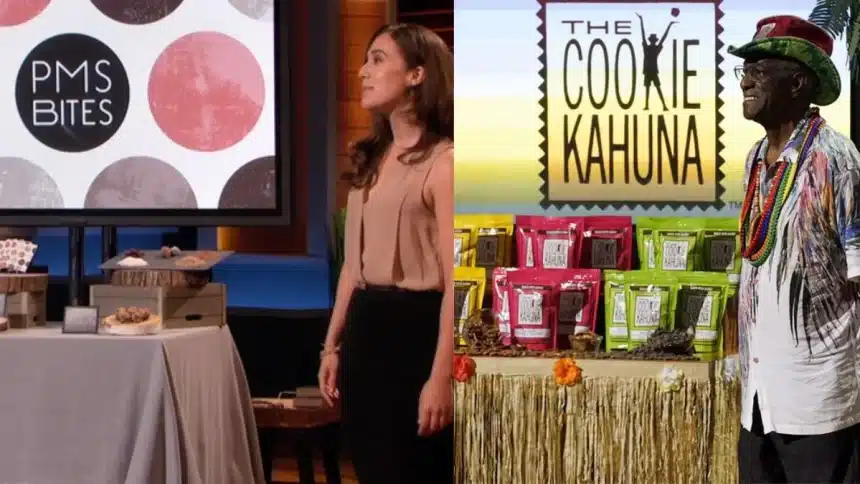
One of Shark Tank’s biggest food flops, Wally Amos, went back to the cookie business with Cookie Kahuna. This was after he sold the rights to his Famous Amos brand a long time ago.
People liked the cookies; however, at the time of filming, the company had generated about $36,000 in sales. The problem was that it cost a lot to ship the cookies, which hurt the company’s profits.
Wally Amos did not own the rights to his name and image anymore. Without those valuable branding rights, the Sharks didn’t see enough long-term potential in the business and passed on the investment.
2. HotShot
Danny Grossfeld introduced HotShot, a canned coffee that stayed warm at 140 degrees, inspired by Japan’s vending machine culture. The Sharks liked the taste and concept, but the excitement ended when they learned the business had no sales despite spending $2 million over six years on development.
Without proof that customers were willing to buy the product, every Shark declined to invest.
3. McClary Brothers Drinking Vinegar
McClary Brothers wanted to bring back those old-fashioned vinegar-based drinks called shrubs. They used ingredients to make these shrub drinks. The McClary Brothers company had actually made a lot of money from selling shrub drinks, over $312,000.
The Sharks felt the vinegar flavor was too niche for mainstream consumers and questioned whether the business could scale beyond a specialty market. Those concerns about mass appeal and growth potential ultimately kept the entrepreneurs from securing a deal.
4. Wired Waffles
One of the more unusual food flops, Roger Sullivan’s Wired Waffles, contained as much caffeine as two cups of coffee. The Sharks thought the waffles were too dry, questioned what made the product unique, and worried that children could consume too much caffeine.
Roger Sullivan had sold only $1,000 worth of Wired Waffles. With weak sales and multiple concerns about the product, the Sharks didn’t believe it had enough potential for investment.
5. Luma Soda
Luma Soda uses monk fruit and honey to make it sweet. It does not use sweeteners like some other sodas do. They want the calories to be low.
The company generated around $180,000 in annual sales; however, its products retailed for about $19.99 per case, making them significantly more expensive than traditional soda brands.
The Sharks think that Luma Soda will have a hard time competing with other sodas that are cheaper and have been around for a long time.
6. Cougar Energy Drink
Ryan Custer tried to sell Cougar Energy Drink to women aged 30 to 55. The Sharks did not like the way Cougar Energy Drink was presented and tasted.
Sharks thought that only selling Cougar Energy Drink to women who’re 30 to 55 years old meant that Cougar Energy Drink would not be sold to many people.
Cougar Energy Drink only made $60,000 in sales. This was not enough to make the investors want to give Ryan Custer money.
7. Mr. Fruity Faces
Mr. Fruity Faces had these cool stickers that tasted like fruit and vegetables. The people who started Mr. Fruity Faces said they were going to sell their stickers at Walmart.
But they did not have any orders from Walmart, so it was not clear if this was going to happen, and the Sharks decided not to give them any money.
8. PMS Bites
PMS Bites had these good chocolate snacks that were supposed to help with PMS cravings. The Sharks thought they tasted great, but they only made $13,400 in seven months.
One of the founders was doing everything by herself, which is a lot of work. She was handling making the snacks and marketing on her own.
The Sharks were worried about the PMS Bites brand. If it could get really big. That is why they did not want to invest in PMS Bites.
9. Brewer’s Cow Ice Cream
Brewer’s Cow makes ice cream that tastes like beer but has no alcohol. The Sharks liked it, but the founders only made $5,000 in sales. They had trouble explaining how they got an order from Whole Foods.
They weren’t ready to answer questions. So they didn’t get any money from the Sharks.
10. Cow Wow Cereal Milk
One of Shark Tank’s sweetest food flops, Cow Wow turned cereal-flavored milk into a bottled beverage available in multiple flavors. The Sharks liked the concept but were concerned about its higher sugar content.
They also questioned the product’s ability to compete with established dairy brands, along with the challenges of manufacturing and gaining widespread retail adoption.
What We Can Learn From These Food Flops
These food flops show that even the most creative ideas need strong sales, smart branding, and a solid business plan to impress the Sharks.
While these products failed to secure investments, their memorable pitches continue to entertain viewers and offer valuable lessons for future entrepreneurs.