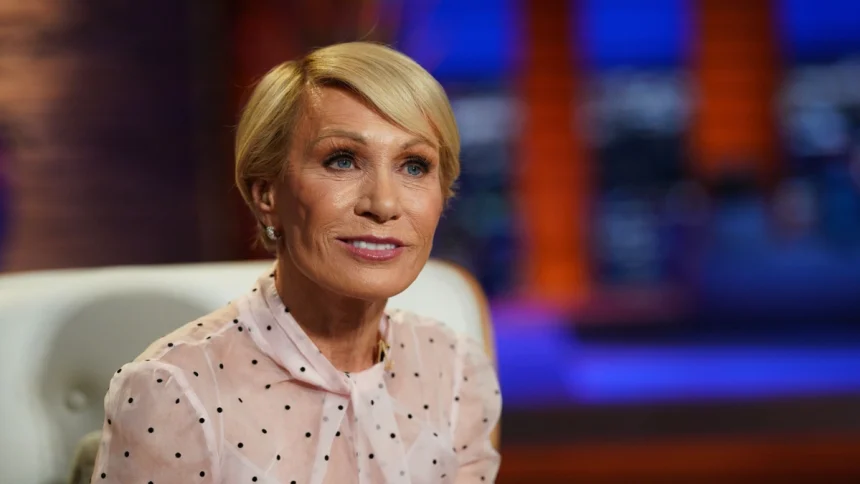
When it comes to personal finance, most advice tends to follow a familiar pattern of saving money consistently, spending carefully, and planning for the future. But Barbara Corcoran, the real estate mogul and star of Shark Tank, takes a different approach.
In a recent interview with CNBC, she revealed that she doesn’t believe in saving money in the traditional sense. Her stance challenges conventional wisdom and has sparked debate among finance experts and everyday earners alike.
Corcoran’s perspective stands out even more because she is widely regarded as a self-made millionaire. Her success story makes people curious about how someone who claims to have “never saved a dime” managed to build substantial wealth. The answer, according to her, lies not in saving but in actively investing and spending strategically.
Barbara Corcoran’s Money Mindset
Corcoran openly shared her surprising philosophy in an interview, stating, “I’m just not a believer in saving money. I’ve never saved a dime my whole life.”
This quote, shared in media interviews, including CNBC, reflects her broader philosophy rather than a literal avoidance of all financial reserves. This bold claim goes against decades of traditional financial advice that emphasizes building savings as the foundation of wealth.
Her mindset stems from her upbringing. Raised in a large family with ten children, Corcoran watched her mother manage finances on a tight budget.
Instead of focusing on saving, her household prioritized using money where it mattered most. That early exposure shaped her belief that money should be actively used rather than stored away.
However, her statement isn’t as reckless as it may initially sound. Corcoran isn’t advocating careless spending. She is emphasizing intentional spending and believes that how you use money matters more than how much you hold onto.
Investing Over Saving
Rather than saving, Corcoran focuses on investing in opportunities, businesses, and people. She believes money has the potential to grow when it is put into motion. According to her, “money makes money if you are willing to share it and spend it.”
This approach shows a more entrepreneurial mindset. Instead of letting money sit idle in a savings account, Corcoran channels it into ventures that can generate returns. Over time, these investments compound and create wealth in ways that traditional savings may not.
She also emphasizes spending on relationships and experiences. For Corcoran, money is not just a tool for financial security. It is a way to enrich life and build connections. This philosophy highlights a broader definition of wealth that goes beyond numbers in a bank account.
Why She Rejects Hoarding Money
Corcoran has made it clear that saving traditionally does not align with her personality. She believes that hoarding money can limit one’s mindset and even dampen ambition. In her words, it “would take my spirit away.”
This perspective ties into her risk-taking nature as an entrepreneur. Building a business often requires bold decisions and financial risks. Corcoran’s willingness to spend and invest freely may have played a role in her success, allowing her to seize opportunities others might avoid.
That said, her approach requires confidence, experience, and a risk tolerance, qualities not everyone shares. Without those, adopting a similar mindset could lead to financial instability rather than success.
A Contrast to Dave Ramsey
However, not all experts agree with Corcoran’s philosophy. Corcoran’s views stand in contrast to financial expert Dave Ramsey, who is known for promoting disciplined saving and debt reduction.
Ramsey’s widely followed “7 Baby Steps” framework encourages people to build an emergency fund, pay off debt, and consistently save for retirement before moving into investing.
His approach is structured and designed to minimize financial risk. By prioritizing savings, Ramsey helps individuals create a safety net that can protect them during unexpected situations. For many people, this method offers a clear and achievable path to financial stability.
While Corcoran focuses on spending and investing, Ramsey emphasizes saving and security first, followed by long-term investing. Interestingly, both approaches share a common goal: building wealth. However, the path to get there differs significantly.
Corcoran’s strategy may appeal to entrepreneurs and high earners who have the flexibility to take risks. On the other hand, Ramsey’s advice is often better suited for individuals seeking stability and predictability in their finances. His method provides a roadmap that works for a wide range of income levels.
Is Corcoran’s Approach Right for Everyone?
While Barbara’s philosophy has worked for her, it may not be practical for everyone. Her success is backed by years of experience, business acumen, and a strong ability to identify profitable opportunities. She also built and sold The Corcoran Group for $66 million, highlighting her deep experience in investing and business growth.
For individuals with limited income or financial obligations, saving remains essential. Emergency funds, retirement accounts, and basic financial planning provide security that cannot be overlooked. Ignoring these elements could lead to serious financial challenges over time.
Instead of choosing one extreme over the other, many financial experts recommend a balanced approach. This means saving enough to ensure security while also investing in opportunities that can grow wealth. Combining elements of both Corcoran’s and Ramsey’s philosophies may offer the best of both worlds.
For example, maintaining an emergency fund while actively investing in skills, businesses, or assets can create both stability and growth. This hybrid strategy allows individuals to benefit from financial discipline without missing out on potential opportunities.
What We Can Learn from Barbara Corcoran
Barbara Corcoran’s take on money challenges one of the most widely accepted financial principles: saving. Her belief that money should be spent and invested rather than saved passively offers a fresh perspective, especially in a world that often prioritizes caution over risk.
However, her approach is not a one-size-fits-all strategy. While it highlights the power of investing and mindset, it also comes with risks that may not suit everyone. Ultimately, the best financial strategy depends on individual goals, income, and comfort with risk.
Corcoran’s story is a reminder that there are multiple paths to success. Whether you choose to save diligently like Dave Ramsey or invest boldly like Barbara Corcoran, the key lies in making intentional and informed decisions.