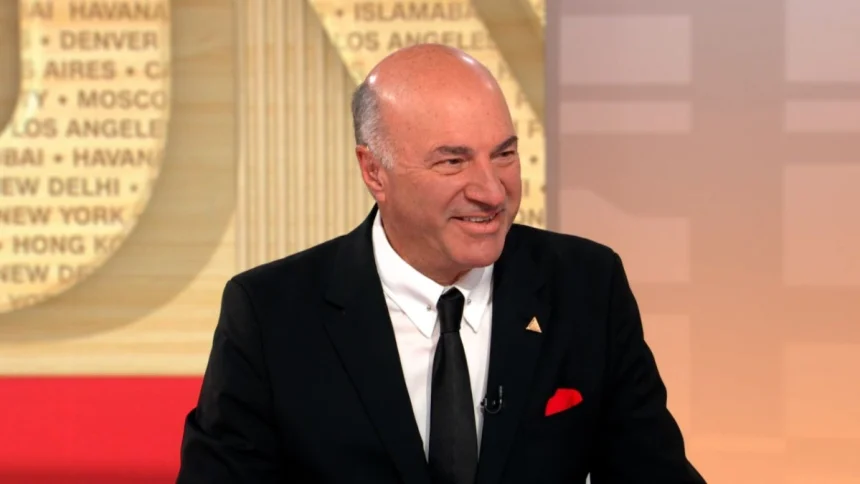
Retirement rarely collapses in one dramatic moment. According to Kevin O’Leary, it happens quietly through habits people repeat every single day without questioning them.
The businessman and television personality has spent years warning Americans that the biggest threat to retirement is not necessarily inflation, recession, or even market volatility. It is passivity. People enroll in a 401(k), contribute the bare minimum, and assume the future will somehow take care of itself.
Meanwhile, lifestyle spending grows, debt piles up, and retirement planning slowly fades into the background of everyday life. For O’Leary, the issue is not a lack of intelligence. It is discipline. And in his view, many Americans are slowly damaging their retirement prospects without even realizing it.
The Quiet Danger of “Set It and Forget It”
A 401(k) is often treated like a completed task. Employees sign up during onboarding, select a contribution percentage, and rarely look at the account again. On paper, it feels responsible. In practice, O’Leary believes this habit is one of the biggest financial mistakes people make.
The problem is not opening a retirement account; it is assuming the account can run on autopilot for decades. Markets change, salaries change, expenses change, and financial goals evolve over time. Yet many workers never increase contributions, reassess investments, or understand how their retirement money is actually performing.
That quiet detachment worries O’Leary more than market crashes themselves. A market downturn can recover. Years of financial neglect often cannot.
What makes the issue particularly dangerous is how invisible it feels. There is no immediate consequence when someone skips increasing their contribution by 1% each year. No alarm sounds when retirement savings remain stagnant. But over twenty or thirty years, those small decisions compound into a much larger problem.
Overspending Is the Real Retirement Killer
O’Leary repeatedly argues that most retirement struggles begin with one simple habit: spending too much money.
He believes many people underestimate how much daily lifestyle choices affect long-term wealth. Expensive dinners, constant online shopping, subscription overload, and impulsive spending may appear harmless individually, but collectively they reduce the amount available for investing.
To O’Leary, retirement planning is less about financial complexity and more about behavioral consistency by investing through O’Leary Ventures.
The issue becomes even more severe when overspending is supported by credit cards. High-interest consumer debt creates a cycle where people pay enormous amounts in interest instead of investing in their future. As debt grows, retirement contributions often shrink.
In many ways, O’Leary sees debt as stolen future income. Every dollar spent on interest is money that no longer has the opportunity to compound over decades inside a retirement account.
That is why he constantly emphasizes budgeting and expense tracking. Not because spreadsheets are exciting, but because awareness changes behavior. People who know where their money goes are far more likely to redirect some of it toward long-term savings.
Why Waiting to “Catch Up Later” Rarely Works
One of the most common assumptions people make about retirement is that they will eventually catch up.
There is comfort in believing higher earnings later in life will solve everything. Many workers assume they can contribute aggressively in their forties or fifties after their careers stabilize and expenses become more manageable. O’Leary strongly disagrees with that mindset.
He argues that retirement planning depends heavily on time, not just income. The earlier someone contributes consistently, the more compound growth works in their favor. Delaying contributions means losing years of potential growth that cannot easily be replaced later.
The Real Power of Compounding
Small contributions made early often outperform large contributions made late because of compounding. O’Leary’s broader point is simple: discipline matters more than dramatic financial moves. Building retirement security is usually the result of steady habits repeated over decades, not sudden bursts of saving near retirement age.
There is also a psychological problem with the “catch up later” approach. People tend to assume future versions of themselves will be more financially disciplined than they are today. But if someone struggles to save consistently now, there is no guarantee the habit will suddenly appear later in life.
A 401(k) Was Never Meant To Be the Entire Plan
Another concern O’Leary raises is that many workers treat a 401(k) as a complete retirement strategy rather than one part of a larger financial picture.
For previous generations, pensions often provided a stronger safety net. Today, much of the responsibility falls directly on individuals. That shift means workers need a more active understanding of retirement planning than ever before.
A 401(k) alone may not be enough to support decades of retirement, especially when people fail to maximize contributions or understand investment fees. O’Leary frequently stresses that workers should know exactly where their money is invested, what fees they are paying, and how withdrawals may affect them later.
He also cautions against depending too heavily on Social Security. Future benefit reductions remain a concern, and relying on one source of income can leave retirees vulnerable.
In O’Leary’s view, retirement should involve multiple layers of preparation, investments, emergency savings, controlled debt, and disciplined spending habits working together rather than separately.
The Cost People Forget About Health Care
Retirement calculations often focus on housing, travel, or lifestyle goals. What many people underestimate, according to O’Leary, is healthcare.
Medical costs later in life can become enormous, even for people who consider themselves financially prepared. A retirement account that initially looks sufficient can shrink rapidly when long-term healthcare expenses enter the equation.
That reality is one reason O’Leary believes people need to save more aggressively than they think. Retirement is no longer simply about replacing a paycheck. It is about preparing for decades of unpredictable expenses while no longer earning an active income.
The uncomfortable truth is that retirement has become increasingly expensive, and ignoring that reality does not make it disappear.
Discipline, Not Perfection
O’Leary’s financial advice often sounds blunt because it is rooted in personal accountability. He does not present retirement success as a mystery reserved for experts. Instead, he frames it as a series of disciplined decisions repeated consistently over time.
That does not mean people need perfect investing knowledge or massive salaries to improve their future. What matters more is paying attention. Monitoring spending habits. Increasing retirement contributions gradually. Reducing high-interest debt. Understanding how a 401(k) actually works instead of assuming it will somehow solve itself.
Kevin O’Leary’s central message is that retirement failure is usually not sudden; it is gradual. People damage their financial future slowly through passivity, overspending, delayed planning, and blind optimism about “catching up later.” His solution is equally simple: discipline, awareness, and consistent action long before retirement arrives.