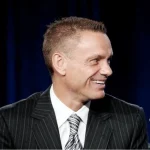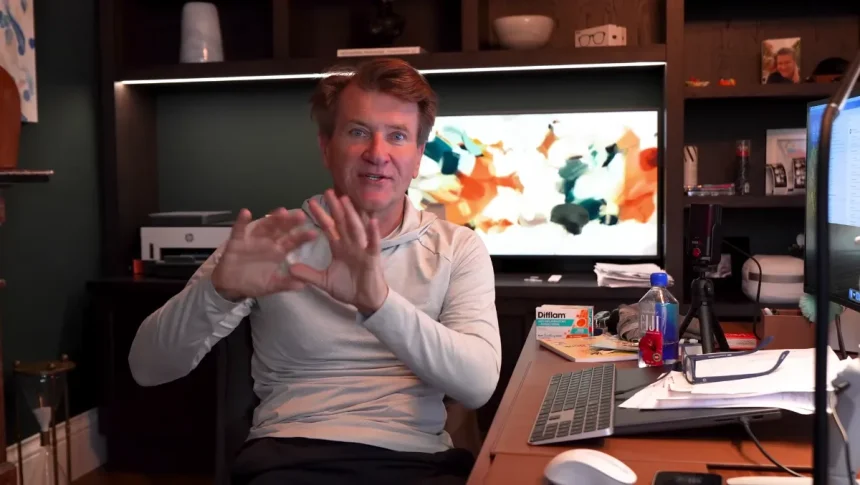
Shark Tank’s Robert Herjavec has sat through countless pitches from hopeful entrepreneurs. After hearing so many aspiring founders share their dreams, he says one common mistake keeps coming up. Many people think launching a business starts with having a brilliant idea, but that’s not really what separates success from failure.
Speaking on the YouTube show Hustle Meals, Herjavec explained that having an idea isn’t the tough part. Turning that idea into something real is where most people struggle. After nearly two decades of watching businesses rise and fall, he’s learned that success comes down to execution, not inspiration.
To be precise, Robert said, “The reality of it is ideas are cheap, execution is hard. You know, over 17 years, we’ve seen so many businesses…the ones that can make it are the ones that can execute. That’s just the reality.”
Why Robert Herjavec Passed on a Pierogi Deal
Herjavec was asked why he chose not to invest in a pierogi business that appeared on Shark Tank. The question came while he was actually quite literally eating pierogies. For more context, it is a dish he grew up eating in Croatia (and still enjoys today, evidently).
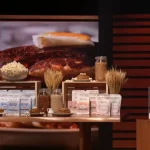
The company wasn’t named explicitly, but it was likely Jaju Pierogi. The brand sells frozen pierogies made from a recipe passed down by the founders’ Polish grandfather.
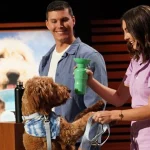
The founders were asking for $300,000 in exchange for 8% of their company. The judges enjoyed the pierogies, but that was about it. None of them invested in it. They felt the profit margins were too small to make the business sustainable.
The Moment That Defined Success for Robert Herjavec
Herjavec also pushed back on the belief that success comes from reaching a certain income or milestone. He said people should focus more on what truly matters to them and what kind of life they want to build.
He elucidated on his point by adding how “People always think it’s a million dollars or something, but success is really personal. It’s what drives you. The desire for pure money fades, but the passion for purpose never fades.”
In a heartfelt moment, Robert shared that his biggest moment of success had nothing to do with money or luxury. It wasn’t selling his company for over 30 million Canadian dollars or buying a flat in upscale New York.
What meant the most to him was being able to buy his father a 1989 Cadillac DeVille. He described the incident as, “In that moment, everything made sense. It may make no sense to anybody else in the world, but it meant everything to him.”
For Robert’s father, Vladimir Herjavec, the Cadillac represented the life he had dreamed of ever since the family fled their home country and started over in a friend’s basement in Toronto. Herjavec then nostalgically recalled his father’s reaction the first time he saw one.
Upon seeing the car, which was symbolic of their freedom and success in a new country as immigrants, Vladimir said, “You no mind, that for rich people.”
Robert warmly described how success means something different to everyone, and for his father, it was as simple as owning that car.
How Early Struggles Fueled Robert Herjavec’s Ambition
Many business owners say they grew up dreaming of becoming millionaires or building empires. But Robert Herjavec’s arc is very much the contrary of popular belief.
As a kid, his goals were much simpler. He wasn’t focused on luxury or status. What he wanted most was to help his immigrant parents build a stable life in Canada and escape poverty.
Robert Herjavec says his drive came from a fear of being poor. Looking back on his childhood, he explained, “It was really hard, only in hindsight. I didn’t know we were poor until we came to Canada.”
Herjavec’s family had to leave their home country after his father was repeatedly punished for speaking out against the Communist government.
When the Herjavec family arrived in Toronto, they had very little and ended up living in a friend’s basement while trying to rebuild their lives from scratch.
Robert Herjavec Turned Hard Work into a Tech Empire
Herjavec’s rise from a modest childhood to becoming a leading entrepreneur didn’t happen overnight. He worked tirelessly, juggling several jobs just to help support his family.
At one point, he spent six months working without pay at IBM, simply to get his foot in the door. That decision paid off when it eventually turned into a full-time position, giving him the skills and confidence to chase bigger goals.
In 1990, he took a chance and started his own company called BRAK Systems. It focused on internet security and grew faster than he expected. Soon enough, AT&T Canada noticed the company and bought it for around 30 million Canadian dollars.
After 13 years (in 2003), Robert launched The Herjavec Group. It started as a small startup with modest earnings and then turned into one of North America’s top cybersecurity firms. The firm was generating roughly 200 million Canadian dollars a year under his leadership.
Herjavec’s company entered a new chapter when it merged with Fishtech Group in June 2022. It was also renamed at Cyderes with the merger. The new rebranded company focuses on cybersecurity avenues like threat management, consulting, and rapid response to security breaches.
Robert Herjavec’s story is a reminder that success doesn’t start with a big idea or end with a big paycheck.
The True Measure of Robert Herjavec’s Success
From growing up in a basement apartment to building a multimillion-dollar cybersecurity firm, Robert’s path is proof that progress happens one step at a time.
In spite of it all, success for Robert has less to do with wealth and more to do with purpose. It was never about just making money. It is more rooted in gratitude and creating something meaningful while honoring where he came from.